Science for the Future Programmes
Student Educator Programmes
Student Educators from the Faculty of Education are exposed to the Family
Math & Family Science programme to
develop their Pedagogical Content
Knowledge (how to teach Mathematics
and Science to younger learners). To
achieve this the students:
- engage into hands-on Family Math & Family Science activities during training sessions, and
- conduct Family Math & Family Science sessions with learners in the community (at local schools).
The Family Math & Family Science training sessions were linked to the following modules:
MTTF 3604 – Foundation Phase Mathematics – third year
MTBI 2503 – Intermediate Phase Mathematics – second year
NSTC 2614 – Intermediate Phase Natural Sciences- second year
SANRAL Physical Sciences ICT Laboratory sessions
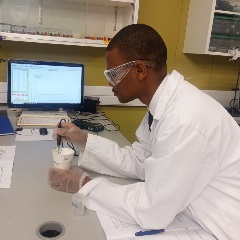
The Physical Sciences ICT Laboratory at Sci-Ed utilises the advantages of Information and Communication Technologies (ICTs ) to support effective science teaching and learning methodology. At the ICT Laboratory, learners and students with potential are exposed to carefully planned curriculum-related physical sciences activity sessions. The programme promotes the understanding of overarching concepts, rather than focusing on isolated facts and “textbook knowledge”. Regarding the latter, different authentic experimental setups in the laboratory provide learners with opportunities to collect data in a real-life context to investigate science concepts.
Apart from conducting experiments and other hands-on activities, learners were also exposed to events like a visit to Boyden Observatory, the Naval Hill Planetarium at Naval Hill as well as a Career guidance session.
The target group is grade 10 - 12 learners and The programme is regarded as a partnership between S4F, SANRAL and the participating schools.
Key Concepts in Science
The Key Concepts in Science programme has been developed for natural sciences teaching in grade 8 and 9 to ensure success in physical sciences in grades 10-12. It covers the grade 8 and 9 Natural Sciences CAPS curriculum, excluding the Live and Living strand. Teachers are introduced and issued with hands-on, minds-on activities and activity material to accompany the worksheets. Hands-on, minds-on activity sessions characterise training sessions in a social context that enables participants to construct their own understanding of science concepts. It also promotes understanding key concepts rather than focusing on isolated facts and “textbook knowledge”. The training focuses on subject content knowledge, process skills, teaching skills, and advocating a hands-on approach. One of the critical elements of the project's success is that the Science-for-the-Future also manufactures and issues the participating teachers with sufficient activity material and apparatus to be utilised in the classroom.
The Professional Development objectives of the Key Concepts in Science programme are to:
▪ train and empower Senior Phase teachers (grade 8&9 in particular) and subject advisors from local schools in the constructivist and hands-on methodology of the Key Concepts in Science programme during term training sessions;
▪ resource the teachers from the participating schools with activity material, laboratory apparatus, and worksheets to be utilised in the science classroom;
▪ monitor the progress of the project strategy continuously via progress reports and feedback opportunities like meetings, etc.
▪ render support to the teachers from participating schools in the region to enable them to integrate the programme into the curriculum successfully.
Due to the successful implementation of the Key Concepts in Science programmes in several provinces over the past decade, the immense growth in the number of project participants, and the request from different role-players to be included in the project activities, the expansion of the programmes was imminent. The decision to scale the project activities to other universities was informed by the increasing demand for higher institutions in South Africa to become involved in developing 21st-century teaching and learning skills and scholarly service to communities.
Family Math
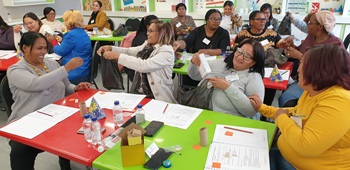
The Family Math programme commenced in 2009 in local communities in the Free State, investing in the skills development of mathematics teachers and enabling parents and caregivers to assist learners in their mathematics learning. The programme experienced exponential growth, extending over time to Gauteng, Kwazulu-Natal, Limpopo, Mpumalanga, Northwest, as well as the Northern and Eastern Cape provinces.
The mission of the project is to demystify mathematics for learners in the early school years by raising their levels of understanding and changing their attitudes towards mathematics. This is done by training the teachers to expose learners to Family Math activities on a regular basis in the classroom and integrate the activities into the curriculum. During the “triangular” project strategy, teachers are trained at the University of the Free State, and apart from integrating the project activities into the curriculum, we also expected them to conduct parent training in the Family Math activities at their respective schools. This enables parents to become involved in their children’s Mathematics teaching and learning at school.
To achieve the goal of the Family Math programme, the Professional Development objectives are to:
- train and enable teachers (and subject advisors) during three professional development sessions;
- train teachers to empower learners’ parents and guardians at the participating schools through at least three parent workshops to support their children’s learning and to establish a link with the school;
- resource the teachers and parents from the participating schools with activity material to be utilised in the classroom and at home (manipulatives and other training material);
- monitor the progress of the project strategy continuously via progress reports and feedback opportunities like meetings and the annual Family Math Summit;
- render support to the teachers from participating schools to enable them to integrate the programme into the curriculum successfully;
- ·organise a summit during the third term of every year for teachers involved in the programme and other role-players to reflect upon project activities of the particular year (Professional Learning Community).
Like the Key Concepts programme, the
Family Math programme has been extended to more tertiary institutions that steer the programme in their immediate environments.