03 June 2026
|
Story Leonie Bolleurs
|
Photo Stephen Collett
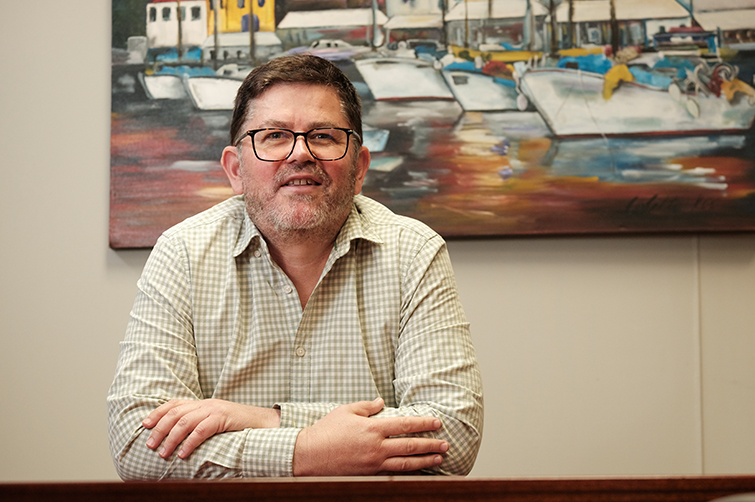 Prof Johan van Niekerk believes the ARC–DOA–UFS Research Chairs are helping to position the university as a growing leader in climate-smart agriculture, sustainable food systems, and agricultural resilience in Africa.
A changing climate, rising food insecurity, pressure on natural resources, and the growing demand for sustainable solutions are forcing agriculture into a new era. Across Africa, researchers, farmers, policymakers, and communities are searching for ways to secure food systems while protecting the future of the planet. At the University of the Free State (UFS), seven research chairs are helping to shape that future through research grounded in innovation and collaboration.
“At the University of the Free State, we are advancing research that moves beyond theory, delivering practical solutions that strengthen food security, resilience, and dignity in our communities. Our research chairs demonstrate that meaningful impact emerges when science is co-created with farmers, industry, policymakers, and society. We are cultivating responsible societal futures by ensuring that innovation translates into livelihoods, skills, and inclusive economic opportunity,” remarked Prof Vasu Reddy, Deputy Vice-Chancellor: Research, Innovation and Postgraduate Studies.
Prof Johan van Niekerk, Vice-Dean: Agriculture at the university, says that since the establishment of the ARC–DOA–UFS Research Chairs in late 2024, they are very proud of how rapidly the initiative has evolved into a nationally and internationally recognised research platform.
Within the first operational phase, the initiative established multidisciplinary collaborations, secured external funding, attracted international postgraduate students and researchers, strengthened partnerships with institutions in countries including Norway, Germany, Kenya, Ethiopia, Tanzania, Brazil, and the United States, and positioned the UFS as a leading African contributor to climate-smart agricultural innovation.
He is also proud of the acknowledgement that four of the research chairs have received for their work. Prof Van Niekerk and Prof Hlami Ngwenya were announced as finalists in the National Science and Technology Forum Awards, and Prof Maryke Labuschagne and Prof Arno Hugo received international recognition through the Research.com rankings. Some of the other staff members linked to the research chairs have also made their mark, receiving academic awards and prizes at conferences.
Research chairs position UFS at the forefront of climate-smart agriculture
The seven chairs cover a wide range of focus areas, including climate change impacts and mitigation in agriculture (
Prof Linus Franke), innovative agro-processing for climate-smart food systems (
Prof Alba du Toit), agriculture risk financing (
Prof Cobus Oberholster), sustainable livestock production (Prof Hugo), climate resilient vegetable and grain breeding (Prof Labuschagne), communication for innovation (Prof Ngwenya), and climate-smart intervention impact assessment (Prof Van Niekerk).
According to Prof Van Niekerk, the initiative has strengthened collaboration between universities, government, industry, and communities, ensuring that research outcomes translate into practical solutions for farmers, policymakers, and society.”
From community impact to global collaboration, research drives sustainable solutions
Across the various chairs, research is already reaching communities in tangible ways. “One powerful example is the soy-processing and nutrition programme linked to the Innovative Agro-processing Research Chair. Through collaboration with community organisations, a soy nut processing facility was installed, and community members were trained in the production of nutritious soy-based foods with low salt and fat content,” says Prof Van Niekerk. The initiative currently supports school nutrition programmes and equips local communities with skills for small business development and income generation.
Another example is the climate resilience work being undertaken with farmers and rural communities through the Climate Change Impacts and Mitigation in Agriculture Chair. “Research on soil carbon sequestration, drought resilience, grazing management, and climate adaptation is already helping farmers better understand sustainable land management and climate risks. The long-term impact will include improved agricultural productivity, enhanced resilience to drought and extreme weather events, more sustainable farming systems, and stronger food security across vulnerable regions of Southern Africa.”
The ARC–DOA–UFS Research Chairs also place strong emphasis on developing the next generation of African researchers and scientific leaders. Young academics, postgraduate students, and postdoctoral fellows from countries including Ethiopia, Kenya, Uganda, Rwanda, Malawi, Tanzania, Togo, Namibia, and Zimbabwe are already contributing to multidisciplinary research programmes. “Inclusivity and capacity development are foundational principles of the initiative. Young researchers are already presenting at international conferences, publishing scientific papers, participating in community engagement projects, and taking leadership roles in multidisciplinary research programmes. The initiative has therefore become both a research platform and a pipeline for developing future African scientific leadership,” says Prof Van Niekerk.
The work of the chairs increasingly contributes to policy discussions around climate resilience, food security, climate finance, and sustainable agriculture. Researchers regularly engage with government departments, financial institutions, and agricultural organisations to provide evidence-based scientific input.
Through high-impact research, international collaboration, postgraduate development, and community engagement, the initiative has enhanced the global visibility and credibility of the university. “We are especially excited about establishing the UFS as a continental hub for climate-smart agriculture, sustainable food systems, climate finance, and ecological innovation,” he notes. Prof Van Niekerk believes that the chairs also provide an African perspective on some of the world’s most urgent challenges.
Highlighting the UFS’ role in contributing meaningfully to responsible societal futures, Prof Van Niekerk remarked: “By combining scientific excellence with practical impact and community relevance, the UFS is increasingly recognised as a university that develops innovative solutions with both global significance and local relevance.”
For Prof Reddy, “Our scholars are not only knowledge producers; they are innovation leaders shaping equitable and sustainable futures. Impactful scholarship is that which empowers communities. This is scholarship that turns knowledge into agency, capability, and sustainable change. Through collaboration, inclusivity, and African partnerships, we are building a research ecosystem that serves society while securing the future of our planet.”