17 June 2026
|
Story Tshepo Tsotetsi
|
Photo Supplied
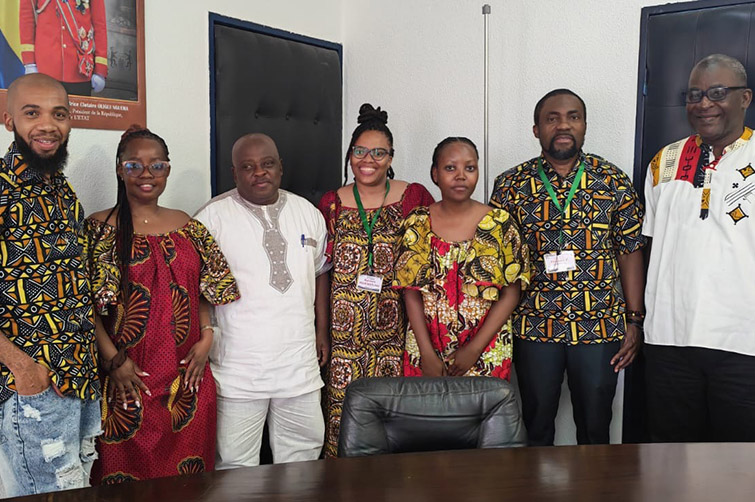 Leaders from the University of the Free State and University of Science and Technology of Masuku (USTM) recently met to explore opportunities for research collaboration, knowledge exchange, and academic partnership.
The future of African higher education is rooted in African universities’ ability to collaborate across the continent, learn from one another, share expertise, and work together to address common challenges.
This shared vision brought academics, researchers, and professional staff from the University of the Free State (UFS) and University of Science and Technology of Masuku (USTM) together for the first USTM–UFS Symposium, held at USTM in Gabon recently. Discussions focused on strengthening research collaboration, academic exchange, innovation, and capacity development.
The symposium, which coincided with USTM’s 40th anniversary, highlighted a growing recognition that the future of African higher education will be shaped not by institutions working in isolation but by universities that are willing to share knowledge, build capacity, and work collectively to advance research, innovation, and development across the continent.
Building African excellence through collaboration
During the visit, the delegation met with USTM Rector Prof Raphaël Bikanga and members of the university’s executive leadership. Discussions focused on institutional transformation, governance, academic excellence, internationalisation, and the role universities can play in responding to the needs and aspirations of African societies.
Drawing on the UFS Revised Strategic Plan 2023–2028 and its commitment to creating responsible societal futures, the delegation shared their experiences of building institutions that are academically excellent, socially relevant, and responsive to a rapidly changing world. These conversations resonated strongly with USTM leadership and academics, who reflected on their own aspirations for African excellence and institutional growth.
Addressing symposium participants, Moikwatlhai emphasised the importance of African universities shaping their own future through collaboration and shared learning. “African universities must not simply be universities located in Africa. They must become truly African universities,” she said.
The symposium programme brought together approximately 80 USTM staff members from different divisions and featured scientific presentations and discussions on research funding systems, academic mobility, capacity development, project management, and research strategy. Beyond the formal programme, the engagement created valuable opportunities for networking and knowledge exchange.
A recurring theme throughout the discussions was the need for stronger collaboration between African institutions. Participants explored practical ways of expanding partnerships through joint research projects, postgraduate supervision, staff and student mobility, and the sharing of expertise and resources.
“The future of African higher education will not be built by isolated institutions competing against one another. It will be built by universities willing to collaborate across borders, languages, disciplines, and histories in pursuit of a stronger continent,” Moikwatlhai said.
The symposium also highlighted opportunities for collaboration in computer science, traditional medicine, embryology, biophysics, virtual international learning initiatives, and the use of drone technology to monitor plant health. Discussions also identified opportunities for mentorship in grant writing, research development, and conference participation.
Importantly, the engagement demonstrated that collaboration between the two institutions is already yielding results. Since the signing of a memorandum of understanding in 2022, researchers from UFS and USTM have worked together on scientific publications spanning the life sciences, medical and health sciences, physical sciences, and social sciences.
While the symposium provided a platform for sharing ideas and experiences, it also reinforced a broader message: Africa’s universities have much to learn from one another and even more to achieve when they work together.
Reflecting on this responsibility, Moikwatlhai reminded participants that universities must ensure that their work extends beyond academic outputs and contributes meaningfully to society. “The role of universities today is not simply to accumulate knowledge, but to mobilise knowledge in service of society.”
As institutions across the continent continue to seek solutions to complex social, economic, health, and environmental challenges, partnerships such as that between UFS and USTM demonstrate the value of collaboration in strengthening research, developing talent, and advancing knowledge that serves Africa and its people.