26 May 2026
|
Story Chrystal Francis
|
Photo Kaleidoscope Studios
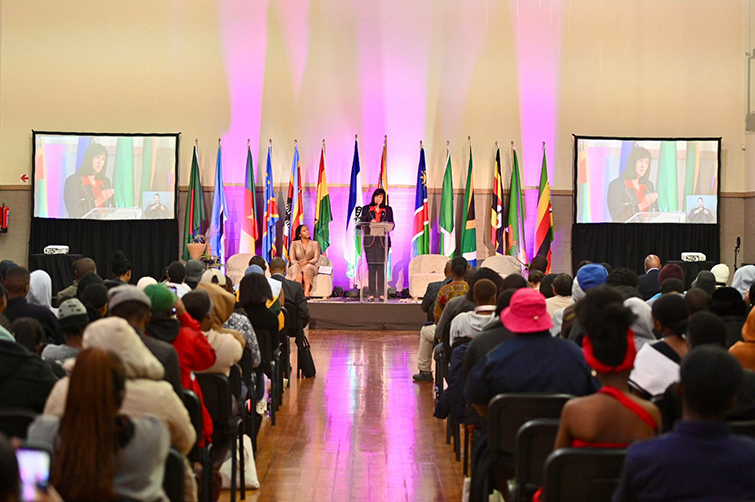 UFS Vice-Chancellor and Principal Prof Hester C. Klopper addresses the UFS Africa Day 2026 dialogue.
The University of the Free State (UFS) marked Africa Day on 25 May 2026 with a dialogue on student well-being, inclusion, and the future of higher education in Africa.
Hosted under the institution’s Critical Dialogues initiative – now in its ninth year – the Africa Day 2026 edition, led by Dr Temba Hlasho, Executive Director: Student Affairs, Sport, Arts and Culture, explored the theme “Leaving No Student Behind: Towards Inclusive Pathways to Student Well-being.”
Leaving no student behind requires more than academic support
The dialogue challenged attendees to reconsider what it means for universities to support students beyond academic performance, particularly amid growing mental health, financial, and identity-related pressures.
Vice-Chancellor and Principal
Prof Hester C. Klopper positioned student well-being not as an institutional add-on but as a strategic and moral imperative linked directly to the future of society itself. Addressing students and staff, she said universities must create environments where students from diverse backgrounds are meaningfully supported throughout their academic journeys.
“The future is not reachable if the students we are entrusted with cannot get there,” Prof Klopper said. “Leaving no student behind is not just a slogan; it is a structural commitment the institution has made.”
She further acknowledged the socioeconomic realities many students continue to navigate, particularly as the June mid-year examination period approaches. Reaffirming the University’s commitment to academically deserving students facing financial hardship, she noted: “I want to recognise again tonight that University management and I have made a commitment that we will do everything possible to ensure that students who are academically deserving remain within the system.”
Why healing, identity, and belonging matter in higher education
The dialogue highlighted the importance of developing support systems that are not only accessible but also culturally responsive and reflective of African-centred approaches to healing, resilience, spirituality, identity, and collective well-being.
Speakers
Prof Deliwe Phetlhu, Dean of the Faculty of Health Sciences, and
Dr Christie “Gogo Bazamile” van Zyl, Indigenous Wellness Consultant, Psychospiritual Counsellor and African Scholar, engaged in thought-provoking discussions on holistic and inclusive approaches to student well-being within higher education institutions. Prof Phetlhu emphasised that student well-being should not be separated from academic success. “Well-being is deeply personal. It is about being emotionally okay, understanding who you are, and recognising the language, culture, and experiences that shape and strengthen your mental health. As higher education institutions, we must start unpacking these realities more intentionally,” she said.
Dr van Zyl encouraged institutions to recognise culturally grounded and spiritually conscious approaches to healing and belonging. “Healing requires us to examine the social constructs shaping our lives – our clans, cultures, provinces, traditions, and histories. These bodies of knowledge matter, because they help people understand themselves more deeply,” she said.
The dialogue reinforced the role universities play in nurturing dignity, belonging, and resilience alongside academic success. By framing Africa Day through student well-being, the UFS highlighted the importance of developing socially conscious and resilient future leaders.
As the examination period approaches, students are reminded that seeking support is a sign of strength. The University encourages students experiencing emotional, mental, academic, or personal challenges to make use of the psychosocial and wellness-support services available across all campuses.