11 November 2026
|
Story Chrystal Francis
|
Photo Supplied
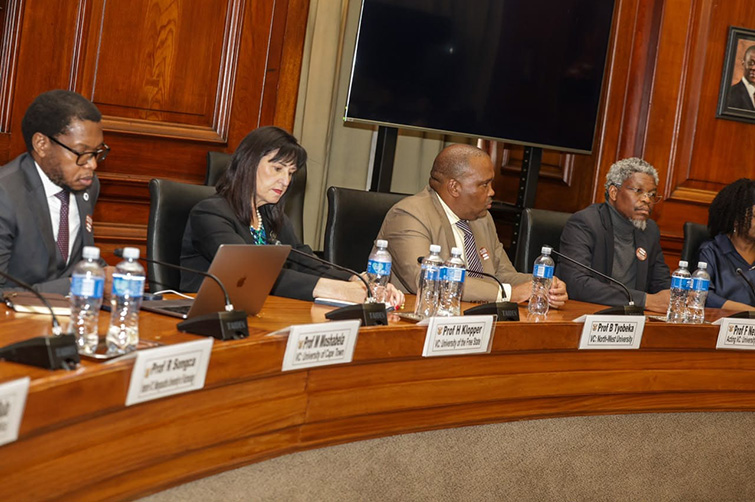 Prof Hester C. Klopper, Vice-Chancellor and Principal, represented the University of the Free State at the Presidential engagement with university vice-chancellors and national science council leaders, held at the Union Buildings in Pretoria on 10 November 2026. The engagement focused on strengthening the contribution of higher education and research to South Africa’s national development.
On
10 November 2026, University of the Free State (UFS) Vice-Chancellor and Principal Prof Hester C. Klopper participated in a Presidential engagement with university vice-chancellors and national science councils at the Union Buildings in Pretoria.
Led by President Cyril Ramaphosa, the discussion addressed the contribution of higher education and research to South Africa's economic development, including the need to increase investment in research and development from approximately 0.6% of GDP to the national target of 1.5% by 2030. Prof Klopper's participation formed part of her continued engagement with national and higher education leaders on matters that are affecting the sustainability of universities and their contribution to South Africa's development.
On
27 March 2026, Prof Klopper engaged with President Ramaphosa when the University hosted the National Cabinet on its Bloemfontein Campus for discussions on service delivery and inclusive growth in the Free State.
“Universities have a responsibility to contribute to the broader societal context in which they exist,” she said at the time.
On 23 October, Prof Klopper joined university council chairs, vice-chancellors, and Student Representative Council leaders at a meeting convened by the Minister for Higher Education and Training, Honourable Buti Manamela.
The agenda addressed university funding, NSFAS, student debt, and preparations for the 2027 academic year, including tuition fees – which directly affect students' ability to afford their studies – and the financial resources universities need to sustain their academic programmes and commitments to staff.
The Presidential engagement on 10 November took the sector's concerns into a wider discussion about the contribution of higher education and scientific research to national development. President Ramaphosa proposed the use of public procurement to make government an early customer for South African innovations. He also called for stronger connections between higher education and the workplace, recognising the difficulties graduates face in finding employment.
The University of the Free State's recently published
Research Review 2022–2024 provides an example of research reaching practical application. It documents how the UFS and Universitas Academic Hospital became the first clinical site globally to integrate the AI-assisted Radiation Planning Assistant into patient care.
The President also recognised the academic independence required for universities to make such contributions.
“Asking our universities to serve national development does not mean asking them to surrender their institutional autonomy. Academic freedom and the freedom of scientific research are important conditions for development,” he said.
For the University of the Free State, the relationship between independent scholarship and public responsibility lies at the heart of Responsible Societal Futures. The University's research is informed by the realities of the Free State, while its participation in national discussions provides opportunities to bring that expertise into decisions affecting the higher education sector.
The proposed Presidential Compact on Knowledge, Skills and State Capacity offers a framework for closer cooperation between government and research institutions. Its success will depend on sustained investment and a shared commitment to protecting the independence that allows universities to contribute rigorous evidence to national decision-making.