Latest News Archive

Please select Category, Year, and then Month to display items
Previous Archive
20 December 2020 | Story Thabo Kessah | Photo Thabo Kessah
Read More Q Lit first anniversary
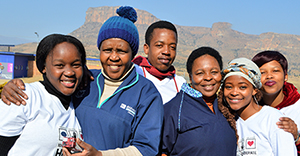
Mbuyiselwa Moloi with student volunteers, Keamogetswe Mooketsi (presenter), Tshumelo Phaladi (producer), and Siphamandla Shabangu (SRC member – Social Justice and Universal Access).

The month of October 2020 marked the first anniversary of the Qwaqwa Campus online student radio, Q-Lit. “It has been a rocky road of sleepless nights, tears, and a lot of challenges. However, we have grown from strength to strength. We have made dreams of ordinary students possible. We have influenced change and inspired students to tap into their talents and potential,” said an elated station manager, Mbuyiselwa Moloi. 

The station came in handy during the worst lockdown period of the COVID-19 pandemic when it bridged the communication gap between students and the university to integrate teaching and learning into the programming to ensure that no student was left behind. “With all of the regulations and online learning, Q-Lit had to be reinvented. While it was not an easy journey, we have grown more than ever before. Our August 2020 report shows that we have pulled in more than 1 600 listeners, even amid the learning, unlearning, and relearning processes. It was during this month that we also ran a series highlighting strategic offices led by women on campus as part of our Women’s Month celebration,” Mbuyiselwa revealed. 

Looking to the future, the station hopes to obtain a full broadcasting licence from the regulatory body, the Independent Communication Authority of South Africa (ICASA), soon. 

News Archive

Compassion improves psychological well-being and reduces emotional distress
2017-09-27

Description: TEDxUFS   Tags: TEDxUFS

Participants in the Kindness Project sharing a
Random Act of Kindness with the cleaning staff,
Mathabiso Sehlabaka and Madineo Mokoena.
Photo: Thabo Kessah

Various studies have reported that the cultivation and practice of compassion may result in improved self-esteem, a decrease in depression and anxiety, increase in subjective well-being, and overall improvement in physical and psychological health. This is according to Counselling Psychologist, Tobias van den Bergh, during the Kindness Project (KP) on the Qwaqwa Campus.

“Students that are involved in this project have shown statistically significant improvements in overall well-being and compassion towards themselves and others,” said Van den Bergh, the project leader and Head of Department: Student Counselling and Development, Qwaqwa Campus.

“In addition, student participants of the compassion-based intervention showed a decrease in their experience of debilitating emotions and depressive symptoms, as well as a significant increase in measurements of positive affect (an indication of life vitality), self-compassion, and well-being. Humans appear to be genetically programmed to be kind. Studies have shown that the same brain structures that are activated when we procreate (i.e. have sex) or eat chocolates, are activated when we are kind. Thus, it means showing an instinctive predisposition towards compassion for our kin and others. Kindness also appears to be contagious. Whenever we observe kindness or experience kindness ourselves, we are much more likely to be compassionate towards our fellow human beings,” he said.

The KP is based on the Science of Compassion, with participants completing a four-week compassion-based intervention where they learned about and practised self-compassion and compassion towards others. In the last week of the programme, participants completed various Random Acts of Kindness off and on the campus.

We use cookies to make interactions with our websites and services easy and meaningful. To better understand how they are used, read more about the UFS cookie policy. By continuing to use this site you are giving us your consent to do this.

Accept