Latest News Archive
Please select Category, Year, and then Month to display items
21 September 2026
|
Story Siqhamo Hlubi Jama
|
Photo Supplied
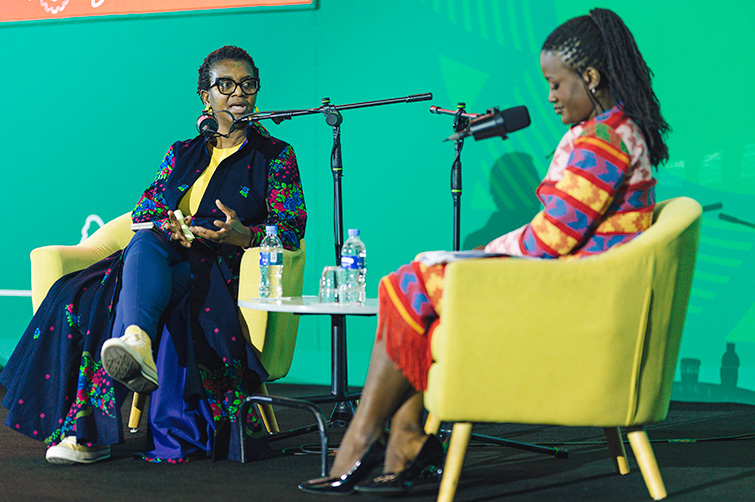
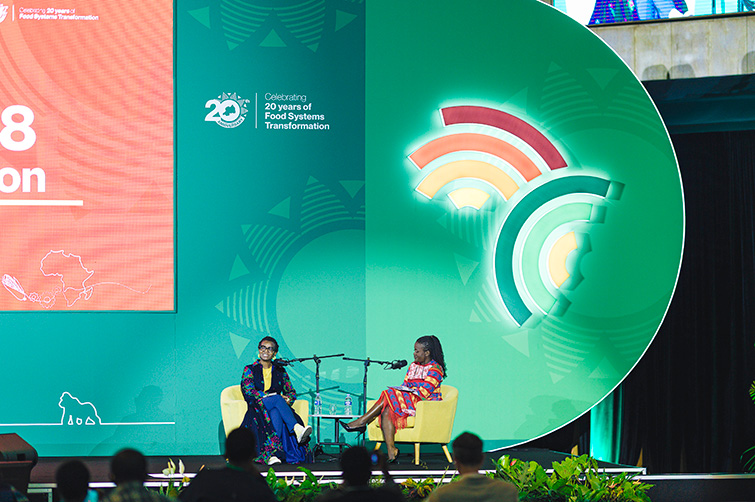 Prof Hlamalani Ngwenya, Head of the UFS Research Chair in Communication for Innovation, during the Day 4 Digitalisation Plenary at the 2026 Africa Food Systems Forum in Kigali, Rwanda.
AI must recognise the intelligence of those who work the land
Artificial intelligence cannot transform African agriculture if it overlooks the millions of people who work the land every day. Speaking at the
2026 Africa Food Systems Forum (AFSF) in Kigali, Rwanda, University of the Free State (UFS) researcher
Prof Hlamalani Ngwenya challenged international delegates to look beyond machine algorithms and invest in human intelligence.
The 20th anniversary of the Forum brought together Heads of State, scientists, investors and agricultural leaders under the theme, "Investing in Africa’s Agri-Food Systems: Nourishing Nations, Growing Jobs, Building Resilience". While digitalisation featured prominently in plenary discussions, Prof Ngwenya raised a pivotal question: What knowledge is feeding these machines' intelligence?
The 238 million ‘magic number’
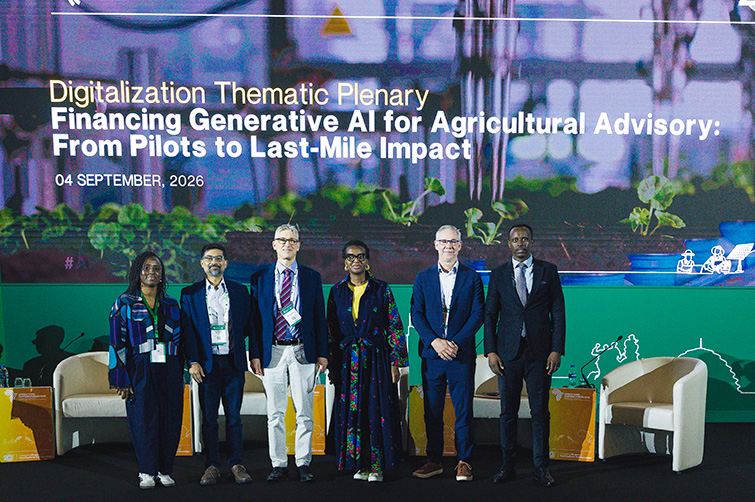
Addressing the Day 4 Digitalisation Thematic Plenary on "Financing Generative AI for Agricultural Advisory: From Pilots to Last-Mile Impact", Prof Ngwenya anchored her argument on a single statistic: 238 million.
For Prof Ngwenya, Associate Professor and Head of the UFS Research Chair in Communication for Innovation, the figure represents far more than a labour statistic. It represents a vast and active community of problem-solvers, experimenters and innovators who generate practical knowledge through their daily work.
Bringing the ‘invisible intellectuals’ into view
A fundamental challenge in the integration of AI into African agriculture is that generative AI models primarily learn from documented academic literature. This can leave out undocumented, practice-based knowledge accumulated by people working on the ground.
Prof Ngwenya identified this gap as the "Missing Middle" - a space occupied by what she calls "Invisible Intellectuals". These include farmers, agricultural extension professionals, cooperatives and local officials whose daily adaptations and innovations rarely find their way into peer-reviewed journals.
"It is like ignoring the reality of the people who live in the same house while trusting the story of someone who only peeps through the window," Prof Ngwenya explained. "The point is not to discredit researchers. Rather, it is to challenge a knowledge architecture in which the observer may become more visible than the practitioner whose daily work generates the evidence."
Balancing the agricultural knowledge ecosystem
Prof Ngwenya also highlighted systemic funding imbalances within agricultural development. Decades of significant investment in formal academic research, alongside underfunded extension services, have created a distorted pattern of growth.
She likened the imbalance to feeding one child to the point of obesity while allowing another to become stunted, and then expecting both to perform at the same level.
For Africa to achieve responsible societal futures, she argued, the focus must shift from basic information delivery towards genuine knowledge facilitation. Financing generative AI, therefore, must begin with investing in the human and institutional ecosystems that generate and sustain local knowledge and context.
"The future of African AI may depend not only on how intelligent we can make the machines, but on how intelligently we recognise the knowledge of the people who make African agriculture work," concluded Prof Ngwenya.