12 January 2026
|
Story Precious Shamase
|
Photo Supplied
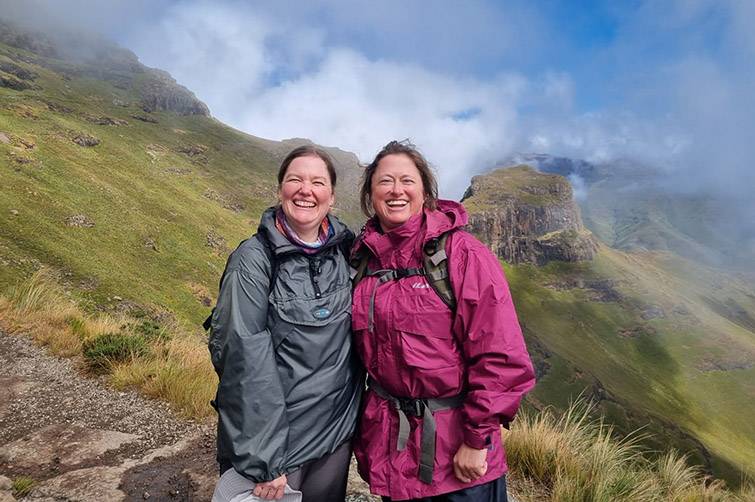 The ARU is celebrating ten years of innovation and impact in mountain research and community engagement this year.
The Afromontane Research Unit (ARU), nestled within the UFS Qwaqwa Campus, celebrates its 10th anniversary this year, marking a decade of dedicated innovation and impact in the field of mountain research.
Foundational pillars
The ARU's mission is to be a world-class centre for inter- and transdisciplinary research, training, and community engagement focused on the Afromontane region, which includes the iconic Maloti-Drakensberg Mountain range. “Our vision is a future where mountain systems and their inhabitants thrive through sustainable management, informed by robust science. We are founded on the principle that the environmental, social, and economic challenges facing these unique high-altitude environments require integrated solutions that bridge the gap between academia, policy, and local communities,” says Prof Ralph Clark, Director of the ARU.
In line with the theme of innovation and impact, the ARU’s journey has been defined by pioneering work. “Innovation is seen in our development and application of advanced techniques, such as remote sensing and GIS mapping to monitor delicate alpine ecosystems, and the establishment of long-term ecological monitoring sites – true ‘living laboratories’. We have also pioneered transdisciplinary research methodologies, integrating natural science (ecology, hydrology) with social science (sociology, economics) to create a holistic view of mountain challenges,” he continues.
The ARU’s impact spans the local, national, and international stages. Locally, the unit work directly with communities, providing science-based advice on sustainable water and land management, contributing to food security, and empowering local stakeholders through training. Nationally, the research informs South African conservation policy, particularly concerning protected area management and biodiversity preservation in the Drakensberg. Internationally, the ARU is a leading voice for mountain research in Africa, collaborating with institutions across the globe and contributing vital data to global assessments of climate change vulnerability in mountain regions. Prof Clark says the ARU’s outputs have contributed to more than 150 publications and the training of a new generation of scientists and conservationists.
Looking ahead, the ARU is poised for even greater growth and impact. “We aim to expand our digital innovation by integrating big data analytics and artificial intelligence into our environmental monitoring. Our focus will pivot further towards climate change adaptation and resilience, particularly for mountain communities that are most vulnerable to extreme weather events and biodiversity loss. By strengthening our partnerships across the African continent and amplifying the voices of mountain dwellers, the ARU will continue to innovate and deliver research that is not only scientifically excellent, but also deeply relevant and actionable, securing a sustainable future for the Afromontane,” notes Prof Clark.
Congratulatory message
Prof Cias Tsotetsi congratulated the ARU on ten years of transformative research, saying that the impact of the ARU's achievements is evident in the benefits extended to both its staff and student body. He highlighted the ARU's role in directly contributing to the university’s strategic Vision 130 – the aspiration to become a research-led institution – by supporting numerous staff members to achieve their PhD qualifications through the University Staff Doctoral Programme (USDP) in Mountain Research. Other milestones include the establishment of South Africa’s first Alpine Research Base, international funding, and the inclusive SAMC2022 and 2025 conferences, which brought together academics, policy makers, and traditional leaders.