03 July 2026
|
Story Siqhamo Hlubi Jama
|
Photo Supplied
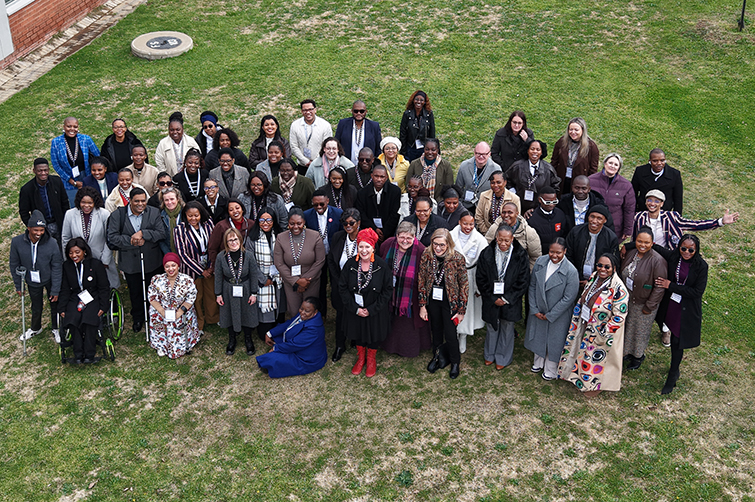 Delegates at the Third International Conference on Disability Rights, hosted by the University of the Free State Disability Rights Unit under the theme Universal Access for Persons with Disabilities: Designing Inclusive Futures, June 2026.
Inclusion – when it is meaningful – does not stop at ramps and reserved parking. It reaches into classrooms, boardrooms, legal systems, and digital platforms. It asks not only whether persons with disabilities can enter a space, but whether they can lead within it.
This was the question at the heart of the
Third International Conference on Disability Rights, hosted by the
Disability Rights Unit of the University of the Free State
Faculty of Law in June 2026. Held under the theme
Universal Access for Persons with Disabilities: Designing Inclusive Futures, the two-day conference brought together scholars, practitioners, commissioners, and innovators for a sustained and wide-ranging conversation about what genuine inclusion demands and what it will take to get there.
Prof Serges Kamga, Dean of the Faculty of Law, set the normative tone in his welcoming address. The benchmark for inclusive policy, he argued, is not compliance. It is flourishing. Persons with disabilities must not simply be accommodated within existing systems – they must be able to participate in and contribute fully to society on their own terms.
For Prof Kamga, this demands that institutions such as the University of the Free State do more than host the conversation. They must be active drivers of transformative change, advancing research and intellectual leadership that translates inclusive principles from academic discourse into societal practice.
Prof Maashutha Tshehla, Deputy Vice-Chancellor: Strategic Initiatives, International and Institutional Affairs, deepened this framing in his opening address. Genuine inclusion, he argued, is not a legal obligation to be discharged – it is a fundamental human right and a lived social reality that must be actively designed. Achieving this requires sustained interdisciplinary cooperation and – critically – the centring of voices and perspectives that have historically been excluded from the design process.
Access as a right, not a privilege
Commissioner
Nomahlubi Khwinana of the
South African Human Rights Commission delivered a keynote address titled
Building Accessible South Africa for the Protection of the Rights of Persons with Disabilities, situating the protection of disability rights at the intersection of global development imperatives and social justice.
Her argument was direct: structural inequalities affecting persons with disabilities are not incidental. They are embedded in educational systems, labour markets, and economic structures, and they must be systematically dismantled. Commissioner Khwinana also drew attention to the intersectional nature of disability – how persons occupying multiple minority identities face compounded and overlapping forms of marginalisation. Inclusion, she argued, must be designed with this complexity in mind.
From access to agency
Dr Ashley Subbiah, Head of Business Development at
Sensory Logix, offered a perspective that reframed the conversation around technology and design. His keynote,
From Access to Agency: Reimagining Inclusive Futures Through Assistive Technology and Universal Design, challenged a common misconception: that assistive technology is a supplementary accommodation, something added on after the fact to bring persons with disabilities closer to a standard designed without them.
His argument was the opposite. Assistive technology is foundational infrastructure. Universal design principles, which embed accessibility into the design of digital and physical environments from the outset, do not merely serve persons with disabilities. They improve outcomes for everyone. Persons with disabilities are not the passive recipients of inclusive design. They are co-designers, innovators, and essential contributors to the ecosystems in which we all live and work.
From visibility to influence
Dr Zukiswa Nzo, Research Fellow in the University of the Free State Centre for Human Rights, closed the keynote programme with a provocation that cut to the heart of something the field of disability rights often sidesteps. Her address,
From Visibility to Influence, drew a sharp distinction between the symbolic presence of persons with disabilities in public and institutional life and the substantive authority to shape the systems, standards, and decisions that affect them.
Representation is not enough, Dr Nzo argued. The trajectory of disability inclusion must extend beyond getting persons with disabilities into the room, towards recognising them as authoritative knowledge holders and equal participants in the design of society. Universal design is not an optional enhancement in this framing. It is the baseline standard of equitable societal organisation.
A conversation that continues
The University of the Free State Disability Rights Unit, coordinated by
Dr Khothalang Moseli, has established this conference as a growing platform for the kind of interdisciplinary and international dialogue that the complexity of disability rights demands. The third instalment affirmed that the conversation is deepening – moving from awareness to accountability, and from aspiration to action.
For the University of the Free State, hosting a conference of this scope is an expression of its commitment to responsible societal futures, not through declaration, but through the sustained work of bringing the right people into the same room and creating the conditions for ideas to travel.