15 July 2026
|
Story Tshepo Tsotetsi
|
Photo Supplied
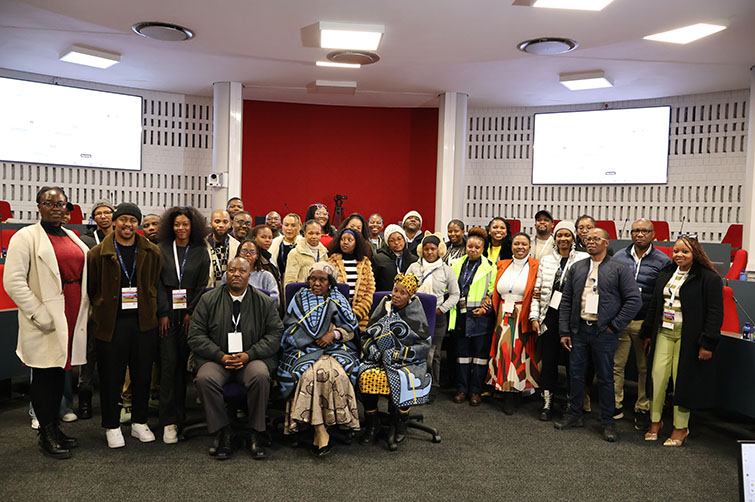 Researchers, academics, policymakers, practitioners, students, and community stakeholders gathered at the University of the Free State’s inaugural Water-Gender-Social Vulnerability Symposium, hosted by the Centre for Global Change on the Qwaqwa Campus.
Water insecurity continues to shape the lives of thousands of people across the
Thabo Mofutsanyana District Municipality, where recurring water supply challenges affect households, schools, healthcare facilities, businesses, agriculture, and livelihoods.
The municipality’s
2025 to 2026 Integrated Development Plan indicates that over 50 000 households rely on water tankers during supply interruptions, highlighting the scale of a challenge that extends far beyond service delivery. Against this backdrop, the University of the Free State’s
Centre for Global Change hosted its inaugural Water-Gender-Social Vulnerability Symposium on its Qwaqwa Campus on 2 and 3 July 2026, creating a platform for critical conversations on one of the region’s most pressing development challenges.
Bringing together researchers, academics, students, policymakers, practitioners, and community stakeholders, the symposium explored how water insecurity intersects with gender, health, inequality, climate change, and social vulnerability. Through interdisciplinary dialogue, delegates reflected on the lived realities of water scarcity while examining how research, innovation, and collaboration can better respond to the needs of communities, particularly those within the Thabo Mofutsanyana District Municipality.
Opening the symposium, Qwaqwa Campus Principal Prof Prince Ngobeni reaffirmed the University’s commitment to ensuring that its teaching, research, and community engagement remain relevant to the challenges facing society. “Water is about far more than infrastructure,” he said. “It is about dignity, health, opportunity, development, and ultimately it is about people.”
Looking beyond the tap
The symposium sought to broaden conversations around water by recognising it not only as an environmental or service delivery issue, but also as a matter of health, gender, governance, and social justice. According to
Dr Lehlohonolo Mofokeng, Data Analyst: Research Development in the Centre for Global Change, the symposium was inspired by postgraduate research examining water-related challenges across the district.
“The main aim of this symposium was to shift the dialogue from merely identifying challenges in Qwaqwa to exploring resilient and sustainable strategies that protect communities and ecosystems for generations to come,” he said.
Drawing on advances in genomics and wastewater surveillance,
Prof Martin Nyaga, Head of the
UFS Next Generation Sequencing Unit, demonstrated how scientific innovation is transforming the way water-related health risks can be identified and managed. “Water is more than a natural resource. It is a foundation of public health,” he said.
Prof Nyaga explained that wastewater surveillance enables researchers to analyse wastewater for biological markers, providing an early indication of viruses, bacteria, antimicrobial resistance, and other emerging public health threats. Combined with genomics, these technologies can support municipalities and health authorities by strengthening disease surveillance and informing earlier interventions before outbreaks escalate.
“By combining responsible water management with innovations such as genomics and wastewater surveillance, we can move from reacting to disease outbreaks to preventing them, ultimately building healthier and more resilient communities,” Prof Nyaga said.
The discussions also challenged delegates to consider who bears the greatest burden when water becomes scarce.
Prof Grey Magaiza, Acting Director of the
Centre for Gender and Africa Studies, argued that understanding water insecurity requires looking beyond infrastructure to the unequal social realities that shape people’s everyday experiences. “Addressing water security without considering gender and social vulnerability risks reinforcing existing inequalities rather than reducing them,” he said. “Sustainable solutions require equity, participation, and human dignity to be at the centre of water governance.”
Prof Magaiza noted that women and girls often experience the effects of water insecurity most acutely because of unequal access to resources, decision-making, and the disproportionate responsibility they carry in securing water and sustaining household well-being.
He stressed that addressing water insecurity requires transforming the systems that shape access to resources and ensuring communities have a meaningful voice in water governance. “Water insecurity is not merely a technical or environmental challenge,” he said. “It is a development, governance, and social justice issue that demands collective action.”
Reflecting on the significance of the inaugural symposium, Dr Mofokeng said the Centre aims to strengthen collaboration between researchers, municipalities, community leaders, and local communities while encouraging research that responds directly to the realities people experience. “We hope the symposium paves the way for lasting collaboration, strengthens interdisciplinary research, and encourages practical responses that improve water security and build more resilient communities,” he said.
By bringing together expertise from across disciplines and sectors, the symposium reinforced the importance of collaborative, community-centred research in responding to one of the region’s most pressing challenges. It also reaffirmed the University of the Free State’s commitment to generating knowledge that not only advances scholarship but also contributes meaningfully to the well-being and resilience of the communities it serves.