22 June 2026
|
Story Thabang Mokoena
|
Photo Supplied
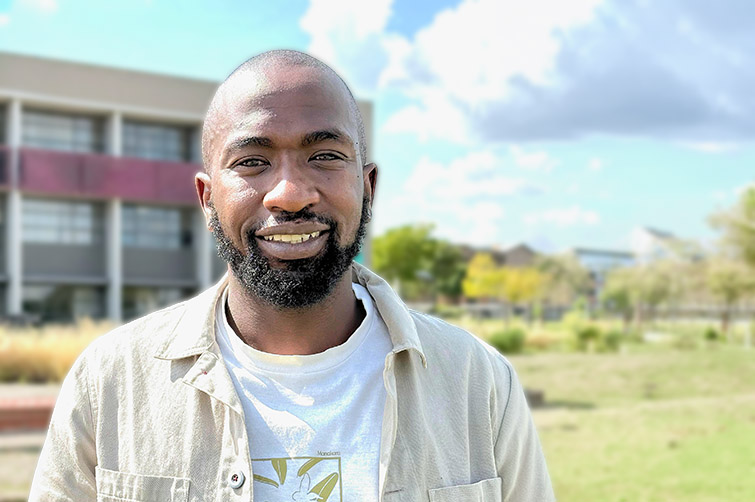 Thabang Mokoena, Community Officer at Centre for Global Change, University of the Free State.
The year 2026 marks 50 years since the historic 1976 youth uprising, a defining moment in South Africa’s liberation struggle that led to 16 June being commemorated as Youth Day. The courage shown by black youth during the Soweto uprising demonstrated the power of unity, resistance, and sacrifice in confronting injustice. Those young people not only challenged the apartheid regime but also became heroes whose legacy continues to inspire generations.
Today’s youth enjoy freedoms that were denied the youth of 1976. They fought for access to education, equality, dignity, and democratic participation. However, an important question remains: what legacy is today’s generation leaving for the youth of tomorrow? How will future generations define the youth of a democratic South Africa?
Young people in South Africa continue to face numerous challenges that affect their everyday lives. These include high unemployment, educational inequality, substance abuse, crime, and gender-based violence. Many young people remain trapped in poverty and hopelessness despite living in a democratic state that promised inclusion and opportunity for all.
From racial exclusion to democratic inclusion
During a recent commemoration of the 1976 youth uprising, Sindisiwe Chikunga the Minister in the Presidency responsible for Women, Youth, and Persons with Disabilities, highlighted government achievements aimed at supporting young people. Among these achievements was the expansion of access to higher education, which reportedly increased by 117.58% between 1994 and 2022. While this growth is commendable, many matriculants still cannot access universities due to limited space, inadequate infrastructure, and financial barriers.
South Africa has moved from racial exclusion to democratic inclusion, yet many institutions still operate with infrastructure designed during apartheid for a minority population. Universities continue to struggle with overcrowding, accommodation shortages, and insufficient resources to meet the growing demand for higher education. If the government is serious about youth development, the focus should not only be on celebrating increased enrolment figures but also on investing in the construction and expansion of universities and colleges capable of accommodating the country’s youth population.
Ms Chikunga attributed sustained student activism, the #FeesMustFall movement between 2015 and 2017, for accelerating progress toward accessible higher education. #FeesMustFall movement exposed the harsh realities of financial exclusion within higher education. Thousands of students took to the streets, demanding affordable, accessible education for poor and working-class families. The movement reminded the country that freedom without access to education remains incomplete. It is deeply concerning that, even under a democratic government, many young people still have to fight for opportunities to study and improve their lives.
Efforts are being made
The minister also highlighted employment programmes such as the National Pathway Management Network and the Presidential Youth Employment Initiative, which reportedly employed over 320 000 young people and created opportunities for 1.1 million youth in 2025. While these initiatives are important, many of the opportunities offered are short-term internships lasting only two or three years. Such programmes cannot fully be celebrated as sustainable employment because they do not guarantee long-term economic security for young people.
South Africa’s unemployment crisis requires permanent, long-term employment opportunities rather than temporary placements that improve statistics without transforming lives. Young people need stable jobs, skills development, entrepreneurship support, and economic inclusion that allow them to build independent futures.
At the same time, government investment in youth development cannot be ignored. The allocation of R192 billion to support disadvantaged students in higher education institutions and the R1.8 billion invested through the National Youth Development Agency in small businesses and skills development demonstrate that efforts are being made. However, funding alone is not enough if structural inequalities continue to prevent many young people from accessing opportunities.
Youth of 1976 vs today’s youth
The difference between the youth of 1976 and today’s youth is that the former had a clear and common enemy: apartheid. Today, youth challenges are rooted in institutional and structural inequalities within both the public and private sectors. The frustrations experienced by young people are growing and are increasingly shaping public dissatisfaction with governance in South Africa.
Youth issues cannot be understood through a single lens. They are deeply structural, gendered, racialised, class-based, and spatial. Young people living in rural areas, townships, and informal settlements continue to experience exclusion differently from those in privileged spaces. Addressing youth challenges, therefore, requires an intersectional approach that recognises the complexity of inequality in democratic South Africa.
As the country commemorates 50 years since the 1976 uprising, Youth Day should not be about remembering the past alone. It should also be about confronting the realities facing young people today and building a future where freedom is matched by dignity, opportunity, and hope.