16 March 2026
|
Story Oageng Keabetswe Nkesi
|
Photo Supplied
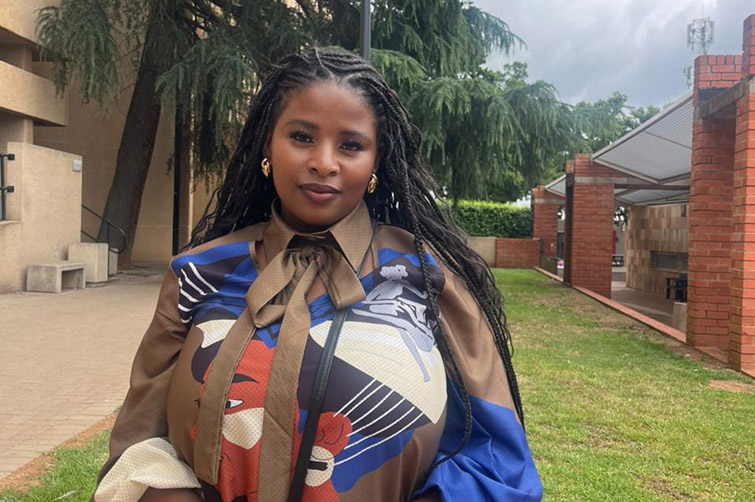 Oageng Keabetswe Nkesi is an Intern: Unit for Institutional Change and Social Justice, University of the Free State.
Opinion article Oageng Keabetswe Nkesi, Intern: Unit for Institutional Change and Social Justice, University of the Free State
The theme for International Women’s Day 2026 (IWD 2026), commemorated on 8 March, Rights. Justice. Action. For ALL Women and Girls, called for the dismantling of barriers to equal justice – including discriminatory laws, weak legal protections, and harmful practices and social norms that erode the rights of women and girls.
As a black woman, I carry with me the struggles of the women who fought tirelessly for the rights and privileges we enjoy today. The 8th of March offers a moment not only for celebration, but also for reflection on my own experiences as a black woman in a contemporary society.
Despite the progress that has been made, patriarchal systems and structures continue to reproduce injustice against women are often compounded by intersecting forms of oppression, including racial discrimination, class inequality, homophobia, and entrenched patriarchal norms that restrict women’s opportunities and compromise their safety.
As a black woman, I have personally encountered moments of injustice in public environments where access to quality service is meant to be accessible to the public at large, yet because of my melanin skin tone, a service will be partially rendered or rendered without quality standards, both in the public and private sectors. At times, I have been treated differently simply because of how I looked, how I was dressed, or the language I preferred. Experiences like these serve as reminders that the journey toward justice and dignity is far from complete.
Yet, acknowledging these realities should not diminish our reasons to celebrate. International Women’s Day remains a vital opportunity to honour the achievements of women and to recognise how far we have come. At the same time, it calls on us to continue striving for a more just and inclusive society, one that pursues equity rather than mere equality.
Such a society must be grounded in a human-centred approach, where the values of ubuntu guide our interactions and where human dignity is not only protected, but actively amplified. Only then can we truly honour the legacy of the women who came before us while building a more equitable future for those who will come after.
Women continue to face structural inequalities
Gender equality and parity must be emphasised to shape and expand women’s access to opportunities. Shying away from confronting these issues only perpetuates systemic disparities manifesting in gendered, racial, and income inequalities. These inequities are reflected in limited access to quality healthcare, unequal economic prospects, and the disproportionate burden of domestic and family violence faced by women.
A significant number of women continue to encounter gender-based violence (GBV). For women living in rural communities, these injustices are often even more noticeable. Limited access to resources, support services, and effective law enforcement can create environments where GBV becomes pervasive, and where perpetrators are seldom held accountable for their actions.
This reality exposes the vulnerability of the very systems meant to safeguard women, systems that should protect our safety, uphold our rights, and defend our bodily independence. When institutions fail to respond decisively, the cycle of violence persists, leaving many women without the protection and justice we deserve. Addressing this crisis requires stronger accountability mechanisms, accessible support structures, and a firm commitment to protecting the dignity and security of all women, regardless of where they live.
Commitment to concrete action
Within this context, International Women’s Day must be more than symbolic. It urges societies to evaluate whether the principles of equality and dignity are meaningfully reflected in law, policy, and everyday practice. True commemoration requires a renewed commitment to concrete action: strengthening legal protections against GBV, addressing wage inequities, expanding access to healthcare and education, and ensuring meaningful representation for women, especially those from marginalised communities, in decision-making spaces.
Ultimately, the promise of IWD lies in its ability to inspire shared responsibility. Honouring the women who came before us means working collectively toward a world where every woman and girl can live free from discrimination, violence, and exclusion, transforming the aspiration of gender equality into reality.