14 May 2026
|
Story Tshepo Tsotetsi
|
Photo Tshepo Tsotetsi
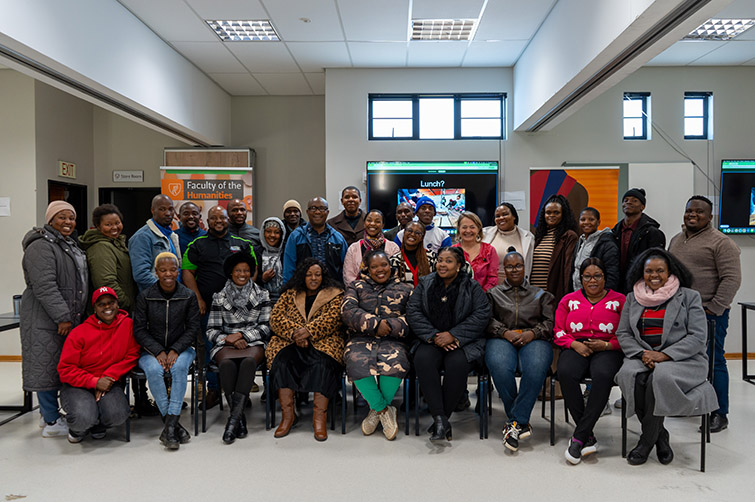 The University of the Free State recently hosted a fundraising workshop focused on training community-based organisations in and around Qwaqwa in grant writing, alternative funding strategies, and digital storytelling.
For many community-based organisations in Qwaqwa, the challenge is not passion or commitment. It is survival. Some organisations are forced to close their doors not because communities no longer need them, but because funding opportunities remain difficult to access, sustain, or control.
It is within this reality that the Department of Community Development under the Centre for Gender and Africa Studies at the University of the Free State (UFS) Qwaqwa Campus recently hosted a fundraising workshop focused on strengthening the capacity of community-based organisations in and around Qwaqwa. The initiative brought together NGOs, students, and development practitioners to explore practical ways of strengthening sustainability through grant writing, alternative funding strategies, and digital media storytelling.
“We cannot speak about sustainable communities without supporting the organisations doing the work on the ground every day,” said Nthatisi Nkoebele, a lecturer in Community Development and organiser of the workshop. “This is the beginning of something bigger that we hope will create long-term impact within our communities.”
Building organisations that can survive and grow
The workshop emerged from challenges identified through the department’s work-integrated learning programme, where Community Development students are placed within local organisations as part of their practical training. Through these placements, the department observed that many organisations were struggling with issues beyond service delivery, particularly financial sustainability, visibility, and administrative capacity.
Nkoebele explained that community organisations continue to play a crucial role in addressing social challenges that government structures alone cannot fully reach.
“Government cannot fund everyone, which is why organisations must also explore private and international funding opportunities,” she said. “These organisations bridge important gaps within communities, so supporting their sustainability is equally a community sustainability project.”
The workshop focused on equipping organisations with practical tools to identify eligible grants and alternative funding opportunities, while also strengthening grant-writing skills such as strengthening proposal narratives, data collection, budgeting, and financial planning. Participants were also introduced to strategies such as digital storytelling, individual giving campaigns, and strengthening organisational visibility to improve long-term sustainability.
Among the attendees was Joss Letshedi from the Micro Informative Youth Agency, an organisation focused on youth empowerment, entrepreneurship, innovation, and access to information in Qwaqwa. Letshedi said the organisation was born from her own experience after struggling to find employment following graduation.
“I realised that many young people in Qwaqwa face the same challenges of unemployment and limited access to opportunities,” she said. “That is what pushed me to start something that could connect young people to information, skills, and opportunities.”
Like many smaller organisations operating in rural communities, the agency faces ongoing funding and operational difficulties. Letshedi noted that even when funding is secured, organisations often have little control over how resources are allocated.
“Sometimes funders decide where the money should go, even when organisations know what their communities need most,” she said. “We also struggle with things like data collection, because many organisations rely on volunteers who may not always have the necessary technical skills.”
The workshop facilitator, Samantha Davidson Green, a film director, media educator, and nonprofit executive from Vermont, USA, encouraged organisations to rethink how they position themselves in increasingly competitive funding spaces. She highlighted digital storytelling as one of the strongest tools available to smaller organisations seeking visibility and support.
“Funders want to see impact, sustainability, and a clear sense of purpose,” Green said. “Your story, your online presence, and your ability to communicate your impact can become some of your strongest fundraising tools.”
She also urged organisations not to become limited by a lack of resources, but to rather focus on building with what is already available to them. “When organisations focus only on what they do not have, they limit their ability to imagine what is possible,” she said. “A strong strategic plan and a credible public presence can open doors to opportunities that many organisations assume are out of reach.”
Letshedi said the workshop offered more than just fundraising techniques – it provided clarity. “This workshop helped me understand how to channel things properly within the organisation,” she said. “I am leaving with practical tools and strategies that we can begin applying immediately.”
Beyond funding conversations, the workshop also reflected the University’s broader commitment to community engagement within its rural context. Nkoebele emphasised that the institution carries a responsibility not only to produce graduates, but also to contribute meaningfully to the communities surrounding it.
“As a university, we have a responsibility to co-create knowledge and contribute to uplifting our communities,” she said. “If these organisations are strengthened, both the students and the communities they serve will ultimately benefit.”