14 August 2026
|
Story Tshepo Tsotetsi
|
Photo Supplied
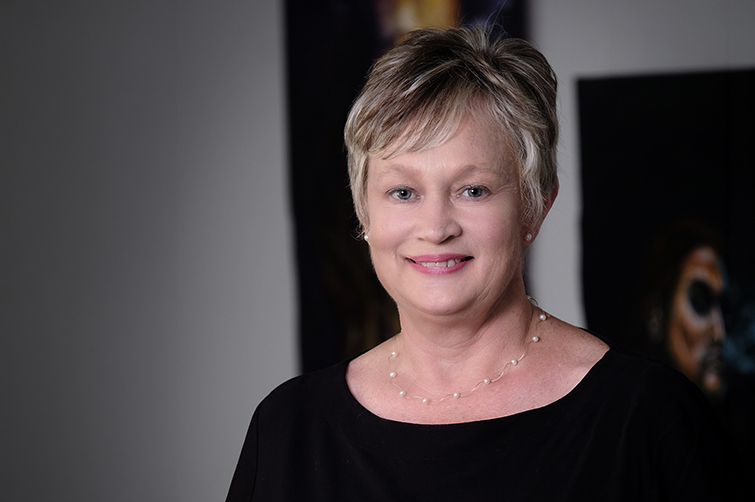 Congratulations to Dr Karen Venter on her induction into the Academy of Community Engagement Scholarship (ACES).
Community engagement is about more than universities sharing what they know. It is about working with the people and communities they serve to understand real challenges, create knowledge together, and find ways for that knowledge to make a difference in people’s lives.
The induction is a lifetime recognition awarded to individuals with a sustained record of leadership, scholarship, and service in community engagement. For Dr Venter, whose work has centred on service-learning, community-based research, and university-community partnerships for more than a decade, the recognition is both a professional milestone and an affirmation of the value of putting communities at the centre of how universities learn, teach, and serve.
“Community engagement is never the work of one person, so while I was incredibly grateful for the recognition, I thought of my workspace, the many community partners, students, colleagues, national and international community engagement and service-learning champions, and my study supervisors who have mentored and supported this journey,” Dr Venter says. “The induction is a recognition of our collective efforts.”
Turning knowledge into something communities can use
Dr Venter’s work has consistently focused on creating opportunities for students, academics, and community members to learn from one another – and on responding to challenges that matter beyond the University.
While lecturing in the UFS School of Nursing in the Faculty of Health Sciences from 2009 to 2016, she worked to integrate service-learning into the curriculum, allowing students to take their learning beyond the classroom and engage with community organisations around real-life needs. Her doctoral research later developed an integrated service-learning praxis approach aimed at strengthening professional learning and development for all partners involved in community–university research partnerships.
That work continues through her role in the Directorate of Community Engagement, where she provides strategic leadership for service-learning, supports academics and community partners in developing meaningful learning opportunities, and helps academics integrate community engagement into their teaching.
One example is the UFS Active Community Citizens through Engaged Scholarship for Sustainability (ACCESS) programme, which creates co-curricular opportunities for students and communities to work together on issues such as sustainability, citizenship, and social responsibility. Rather than students simply learning about these issues in a classroom, the programme creates space for them to work alongside communities in understanding challenges and developing responses.
For Dr Venter, these partnerships are rooted in a fundamental shift in how universities understand the communities around them. “Over the past decade, my work has been grounded in a belief that knowledge is co-created through relationships and partnerships, trying to address societal challenges,” she says. “Communities are not recipients of knowledge, but active partners in co-generating it.”
That principle is also reflected in her involvement with Community Engagement South Africa (CESA) and the
Global University for Lifelong Learning (GULL), where she has supported the recognition of learning gained by community partners through practical and reciprocal engagement.
Her induction into ACES now places this body of work within a global community of scholars and practitioners committed to strengthening university–community collaboration. Dr Venter sees the recognition as an opportunity to build on existing partnerships, develop new international collaborations, and continue advocating for scholarship that responds to the realities communities face.
“I see it as an opportunity to strengthen existing partnerships, create new international collaborations, support capacity-building initiatives, and continue advocating for scholarship that is socially responsive, impactful, and grounded in meaningful engagement with communities,” she says.
As UFS celebrates Women’s Month under the theme ‘
Beyond Representation: Empowered Women Empower Women’, Dr Venter’s induction also offers an opportunity to celebrate a woman whose work has helped create spaces for others to learn about, participate in, and contribute to social change.
Her message to women working in higher education and community engagement is not about waiting for one defining moment of success, but about recognising the value of work done consistently over time.
“I would encourage women to trust the value of their voice, their expertise, and the unique contributions they bring to their work,” Dr Venter says. “Most importantly, I would encourage women to support one another, celebrate their achievements, and continue creating spaces where communities can thrive – and where co-created action-oriented knowledge can be used as a force for positive social transformation.”