26 February 2026
|
Story Tshepo Tsotetsi
|
Photo Stephen Collett
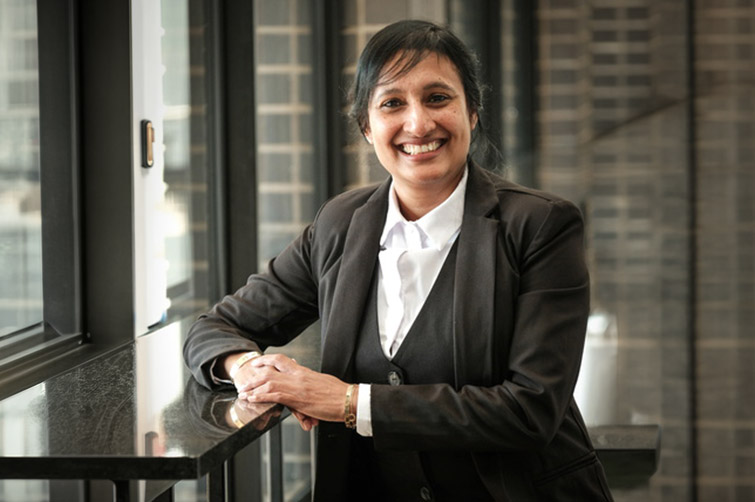 Prof Tameshnie Deane has again been invited to serve as an Acting Judge of the Free State High Court.
Prof Tameshnie Deane, Vice-Dean: Research, Postgraduate Studies and Internationalisation in the Faculty of Law at the University of the Free State (UFS), has once again been invited to serve as an Acting Judge of the Free State High Court.
She will serve as an Acting Judge until the end of March, continuing a journey she began in 2019, balancing her academic leadership with hands-on judicial experience.
“Being invited to serve again as an Acting Judge is something I approach with a deep sense of responsibility and appreciation,” Prof Deane said in response to this new appointment.
Every time she steps into the courtroom, she gains insights that she brings back to her work at the university. “Each appointment strengthens my understanding of the law in practice and supports my ongoing efforts to serve both the university and the broader justice system in a meaningful way.”
These experiences also shape how she guides postgraduate students, leads research initiatives, and drives international collaborations. “Each judicial appointment offers invaluable practical insight that continues to inform and refine my academic work.”
She adds that working on real cases provides an invaluable connection to a constantly changing society. “Engaging directly with matters before the courts provides a clearer view of the societal and legal challenges that shape many of the fields I work in, including human rights and questions of justice more broadly.”
These repeated appointments have helped her gain a deeper understanding of the ways in which her two worlds intersect. “Through my acting appointments, I have come to appreciate even more how closely connected academia and the judiciary are.”
Prof Deane believes that connection benefits students, graduates, and the broader legal community. “When universities maintain a strong connection with the judiciary, they strengthen their ability to develop graduates who are not only knowledgeable, but who can contribute meaningfully to society and to the advancement of justice.”
Her return to the bench shows how academic work and judicial service can go hand in hand, enriching the faculty, inspiring students, and making a real difference in the legal landscape.