18 March 2026
|
Story Christelle du Toit
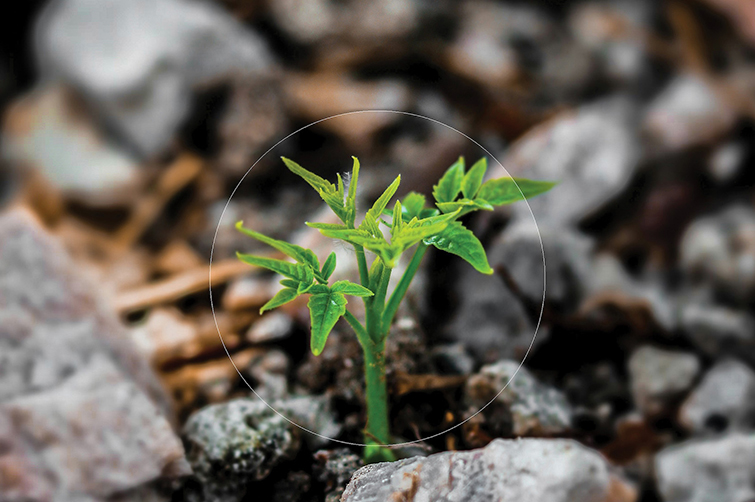
In laboratories studying emerging diseases, in classrooms shaping future leaders, and in research partnerships across continents, work at the University of the Free State is helping societies respond to some of the most pressing challenges of our time.
The UFS Impact Report 2025 brings these efforts together, offering a picture of how the university’s research, teaching, and partnerships are influencing policy, strengthening institutions, and supporting communities across South Africa, the African continent, and the wider world.
Across its faculties and research centres, scholars are engaging with questions that affect everyday life: how societies rebuild trust in institutions, how ecosystems respond to environmental pressure, how health systems detect disease earlier, and how economies can grow in ways that include more people.
For the University of the Free State, global impact is not defined only by research outputs or rankings, but by how knowledge contributes to stronger societies and more resilient futures.
Vice-Chancellor and Principal Prof Hester C. Klopper says universities must increasingly define their role in a world shaped by uncertainty and rapid change.
“The world finds itself in an era where there is no blueprint for universities on how to approach the future,” she says.
“In an increasingly interconnected and evolving world, it is tempting to emulate what other institutions are doing. However, it is essential that we affirm our own institutional identity and work towards finding our own solutions – our unique purpose, and our place in the future we want to create.”
This approach is reflected in the university’s alignment with the United Nations (UN) Sustainable Development Goals (SDGs) and the African Union’s (AU) Agenda 2063 – frameworks that guide research aimed at building responsible societal futures.
“Universities must lead with purpose by using knowledge not only to understand the world, but to improve it,” observes Prof Vasu Reddy, Deputy Vice-Chancellor: Research, Innovation and Postgraduate Studies.
Building just and accountable societies
One area where UFS scholars are making a contribution is in strengthening governance and justice.
Researchers in law, governance, and the social sciences are examining questions such as leadership accountability, reparative justice, and the foundations of peaceful societies. Their work contributes to continuing debates about how countries address historical injustice while building democratic institutions that are transparent, inclusive, and resilient.
By engaging with policymakers, legal practitioners, and civil society organisations, this research helps translate academic insight into practical approaches to governance and leadership.
Prof Reddy agrees, “Research matters most when it informs policy, empowers communities, and responds to real societal challenges. At the UFS, impact is not measured by outputs alone, but by how knowledge strengthens societies. Investing in research is ultimately an investment in people, their health, education, dignity, and opportunity.”
Investing in people and knowledge
Other initiatives focus on human development.
In the health sciences, researchers are advancing technologies such as next-generation sequencing, strengthening the ability of health systems to detect diseases earlier and respond more effectively to emerging health threats.
Education research at the UFS is also shaping conversations about teaching and learning across the continent. Studies on instructional leadership and teacher development have informed education policy and reform in several African countries, contributing to stronger learning environments for future generations.
Together, these initiatives reflect the university’s commitment to investing in knowledge that strengthens people and institutions.
Understanding and protecting the natural world
Environmental sustainability is another important focus of the university’s research.
Scientists at the UFS are studying issues such as air quality, water purification, biodiversity, and ecosystem interactions. Their work deepens the understanding of how natural systems function and how societies can responsibly manage natural resources in the face of climate change and environmental pressure.
These insights help inform decisions by policymakers, communities, and industries seeking more sustainable ways of living and working.
Rethinking prosperity and economic inclusion
Economic development is another area where UFS research is contributing new perspectives.
Some scholars are exploring economic thinking inspired by African philosophical traditions such as Ubuntu, examining how economic systems can balance growth with social justice and community well-being.
Others are studying urbanisation and inequality in rapidly growing cities, helping policymakers understand how housing, land use, and infrastructure shape opportunity and belonging.
Together, these studies highlight the importance of economic development that is both inclusive and sustainable.
Partnerships that extend the reach of knowledge
Much of the university’s impact emerges through collaboration.
Researchers at the UFS work with universities, governments, industry partners, and international organisations to expand the reach of their work and translate ideas into practice. “Impact grows when knowledge is shared, and partnerships turn research into solutions that strengthen societies. Collaboration extends the reach of innovation, ensuring that ideas from the UFS shape futures far beyond the campus,” remarked Prof Vasu Reddy.
Through these collaborations, the University of the Free State continues to build a research environment where curiosity, innovation, and societal responsibility intersect.
Prof Klopper believes that this work reflects a shared commitment across the university community.
“Progress is not measured solely by outcomes, but by the integrity of the journey itself,” she says. “Together, we walk with purpose, guided by values, united in a vision to shape a future defined by compassion, innovation, and a shared commitment to a just and sustainable society.”
From laboratories and lecture halls to policy discussions and community partnerships, the work of UFS scholars and students reflects a clear purpose: using knowledge to help shape responsible societal futures.
Impact Hub
The latest UFS Impact Report is now available. Explore the stories behind our research, innovation, and societal impact.