18 June 2026
|
Story Dr Olivia Kunguma
|
Photo Supplied
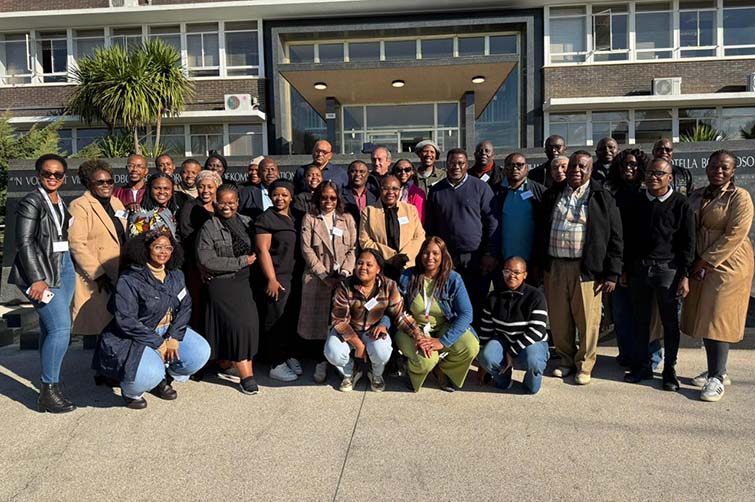 Master of Disaster Management students – with lecturers and industry stakeholders – who participated in DiMTEC's practical examination, which challenged students to develop solutions for a flood disaster scenario based on events in Limpopo.
Master of Disaster Management students at the University of the Free State (UFS) recently tackled a real-life flood disaster scenario as part of a practical examination designed to prepare them for the challenges of the profession.
Held on Friday 29 May by the Disaster Management Training and Education Centre for Africa (DiMTEC), the practical examination was based on the 2025-2026 flood disaster in the Limpopo province, South Africa. Students worked in multidisciplinary groups to assess the impact of the disaster and develop recovery plans, presenting their findings to lecturers and disaster management practitioners.
According to Mosotho, the exercise produced solutions with practical value for disaster management practitioners.
"I am grateful to have been part of this practical examination, from drafting the scenario, presenting it to the master's students and listening to their presentations. From all the groups, I managed to obtain adoptable, applicable solutions that I will apply to effectively manage floods in the Capricorn District; some include a trauma support approach, a systematic risk approach, and early warning system visualisations."
Bridging theory and practice
Since 2009, DiMTEC has been using a practical examination model to bridge the gap between theory and practice, strengthen graduate attributes in disaster risk management, foster collaboration with practitioners, and enhance interdepartmental engagement within the university.
The practical examination requires students to work in groups made up of representatives from the programme's elective modules, including Disaster Mental Health, Risk and Impact Assessments, Strategic Disaster Communication, and Geographical Information Systems. Students are given a week to analyse the scenario and develop solutions before presenting their reports to lecturers and invited practitioners.
The purpose of inviting industry practitioners to participate in the practical examination is to give back to the community through scientific findings and practical solutions to challenges they are experiencing.
The examination attracted a range of stakeholders who contributed to the students' presentations. These included Prof Linky Makgahlela, Vice-Dean: Research and Postgraduate Studies in the Faculty of Natural and Agricultural Sciences; Dr Markes Butler, Director of the Free State Provincial Disaster Management Centre; Dr Bradley Sookram from Continuous Professional Development in the Faculty of Health; Lebogang Mosotho; Shivasa Richard Nkuna, Head of the Disaster Management Centre in Mopani District Municipality; Patrick Mdaka from Disaster Response and Recovery at the Provincial Disaster Management Centre in Limpopo; Claudia Mangwegape from the South African Red Cross Society in the Free State; Dr Ellias Sithole, Head of the National Disaster Management Centre; Billy Barnes, General Manager of the Mangaung Metropolitan Municipality Disaster Management and Fire Brigade Control Centre; Dr Thabang Thinda, Head of Community Services at Mangaung Metropolitan Municipality; and Prof Paul Oberholster, Dean of the Faculty of Natural and Agricultural Sciences.
Building a future disaster management workforce
Prof Oberholster said the practical examination helps prepare students for the workplace while demonstrating the value they can bring to communities.
"The master's students must become disaster risk management champions in the communities they serve; they must take the findings of this practical examination forward, for example, starting with driving the importance of disaster risk management education at the primary school level," Prof Oberholster explains.
In his closing remarks, Dr Sithole highlighted the value of the initiative in preparing students for the workplace.
"Having observed the student presentations, I can see that there is a promising and ready workforce from this cohort. When we interview students, we expect them to give a presentation and check their body language, which reflects their confidence. At the NDMC, we want to employ people who are hungry to work and get their hands dirty. Those are the graduate attributes we are looking for. This practical exam opens students' minds and prepares them for the dynamic pressures of real life. This is an excellent initiative; other universities should adopt it, as it helps students to think outside the box".
The practical examination continues to provide students with opportunities to apply their knowledge to real-world challenges while strengthening relationships between the university and disaster management practitioners. As disaster risks become increasingly complex, initiatives such as this help prepare graduates to respond effectively, adapt to changing circumstances, and contribute meaningfully to the communities they serve.