18 August 2026
|
Story Siqhamo Hlubi Jama
|
Photo Supplied
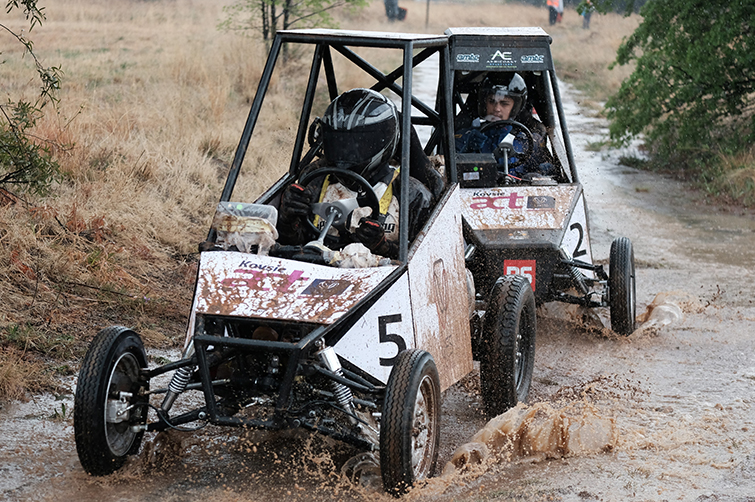 The Kovsie ACT Eco-Vehicle Race returns to the University of the Free State Bloemfontein Campus on 29 August, bringing together student teams from four universities to test their self-built, solar-powered vehicles.
Nine months of building, testing, and troubleshooting come down to one Saturday. On 29 August, the Kovsie ACT Eco-Vehicle Race returns to the Bloemfontein Campus, with race 1.0 running in the parking zone next to the Modlec Building and the 2.0 off-road race taking the maintenance route behind the Financial Planning Law Building.
Now in its ninth year, the event brings together student teams who have spent months building solar-powered vehicles from the ground up, and who will spend the day testing them against every measure of endurance, skill, and preparation.
A programme built in five cycles
The vehicles taking to the track this year are the product of the Eco-Vehicle Sustainable Skills Programme, run through Kovsie Support Services in Student Affairs.
"The skills programme consists of five cycles," explains Karen Scheepers, Assistant Director in Kovsie Support Services. "In cycle one, the students build a small-scale race car that includes a charging station and a solar panel. In cycle two, they learn to programme the car from their cellphones or laptops. Cycles three and four focus on building the larger race cars with battery packs and solar panels. All of this comes together in cycle five during the Eco-Vehicle Race, when the energy conservation of the cars is tested."
Teddy Sibiya, Senior Assistant Officer in Kovsie Support Services, notes that the value of the programme extends well beyond race day itself. "This effort provides students with a set of skills that will help position them in the labour market," he says. "They are equipped with basic knowledge and abilities in sustainable energy, enabling them not only to compete in the race but also to understand the inner workings of the vehicle." Before race day, teams also undergo a two-day scrutineering process to confirm that their vehicles are safe to race and that drivers are fit to compete.
A decade of growth
What began with a single prototype in 2016 has grown into a multi-institution programme. The Central University of Technology joined in 2020 with a second prototype vehicle, and by 2025, Nelson Mandela University had partnered with the University of the Free State and the Central University of Technology to develop a third off-road prototype. This year, two teams from the Vaal University of Technology join teams from the Central University of Technology, Nelson Mandela University, and the Qwaqwa, South, and Bloemfontein Campuses of the University of the Free State.
Seven teams will take part in the 2.0 off-road race, while the 1.0 race features entries from five colleges alongside the university's Qwaqwa and South Campuses. This year also marks the final chapter for the 1.0 category, as the programme's focus shifts fully to the more advanced 2.0 vehicles starting in 2027.
From pit stop to chequered flag
Pit stop setup begins at 08:00. Judging follows at 08:30, and the parade around the track opens proceedings at 09:00. The programme includes a Smart Lap for both the 1.0 and 2.0 races, a timed run that tests how vehicles handle the main track for the first time. A forty-five-minute endurance race follows, built around one simple goal: to complete the most laps using the least energy, a test of stamina, strategy, and quick thinking. The 2.0 off-road race adds a Joker lap to that challenge, while the 1.0 race also includes the Spirit Cup, recognising teamwork, creativity, and crowd energy. The day concludes with awards and interviews in the afternoon, along with entertainment from the Arts and Culture Office.
Last year's race was a reminder of how unpredictable the event can be. Heavy rain turned the track into a genuine test of endurance, with the Central University of Technology taking the overall win and Nelson Mandela University claiming the Best Prepared Car award. With more institutions involved this year, anticipation ahead of race day is high.
Skills that go beyond the track
The Eco-Vehicle Race gives students a practical grounding in both sustainable energy and in how they learn through building, testing, adjusting, and trying again until each car performs as it should. It also teaches the value of working in teams, sharing ideas, and seeing theory become practice once the wheels hit the track. These are the kinds of lessons that prepare students for careers where innovation, resilience, and collaboration matter most. In this way, the race reflects the University of the Free State's broader commitment to shaping
responsible societal futures.