23 March 2026
|
Story Dr Harlan Cloete
|
Photo Supplied
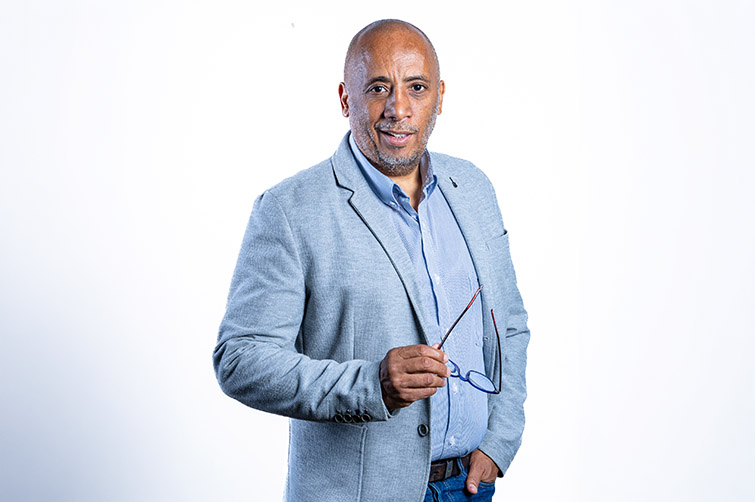 Dr Harlan Cloete is a Research Fellow at the Centre for Gender and Africa Studies, University of the Free State’s, and the visionary behind the Cape Winelands Knowledge Sharing Festival.
The Cape Winelands, in my view, South Africa’s billionaire belt, is home to iconic wine brands, global tourism and a thriving sports culture. Human potential is evident across the region, recently illustrated when Adriaan Wildschutt from the picturesque town of Ceres won the New York Marathon in under an hour. Yet despite this wealth and talent, youth unemployment remains one of the region’s most stubborn challenges Many young people are born into families at the bottom of the economic pyramid, perpetuating cycles of poverty that are difficult to break.
Youth unemployment remains one of South Africa’s most pressing socio-economic challenges. According to Statistics South Africa, youth unemployment among those aged 15-34 stood at approximately 46.1% in the first quarter of 2025. This year also marks 30 years since the adoption of the South African Constitution, which enshrines the right to education. Section 29 guarantees every citizen access to basic and further education and obliges the state to take reasonable measures, including financial support, to make education progressively accessible. While government has a constitutional obligation to expand educational opportunities, it cannot tackle youth unemployment alone.
Cape Winelands Knowledge Sharing Festival
Addressing the problem requires collaborative action, what I describe as the ABCG approach to governance, where academia, business, community and government work together to translate knowledge into practical opportunities for young people.
The value of this collaborative model was demonstrated at the 3rd instalment of the Cape Winelands Knowledge Sharing Festival, recently held at Paarl City Hall and attended by more than 150 delegates over the two days. Hosted by community broadcaster KC 107.7, the festival brought together partners including the Human Sciences Research Council, Drakenstein Municipality, the Cape Winelands District Municipality, Amazon, IntoFood, VestraOne, the Learning Trust and the deciduous fruit industry leader Hortgro.
Delivering the closing remarks, Deputy Minister for Social Development Ganief Hendricks praised the initiative for placing youth unemployment firmly on the local development agenda. “I know of no other gathering in South Africa that purposefully brings academia, business, community and government together to share knowledge and lessons on sustainable local youth development,” he said.
More than 20 presentations were delivered during the festival, alongside exhibitions from institutions such as the IEC, LGSETA, the Presidential YES Programme, the National Youth Development Agency and the South African Council for Business Women. These interactions created opportunities for young people to engage directly with institutions that can support their development and career pathways. A notable highlight was the presentation by local call centre operator Justus Fourie from Sigma, who outlined plans to expand the company’s call centre operations in the region. Such expansion could create new employment opportunities for young people while strengthening the local economy. Education and skills development emerged as central themes throughout the discussions. Stefan Maritz, CEO of IT company VestraOne, highlighted that many of his employees are largely self-taught rather than degree holders, illustrating how the future of work increasingly depends on both formal education and practical skills acquisition.
The festival also introduced four pre-conference How2 Workshops, designed to equip young people with practical skills and create space for dialogue between youth and sector leaders. International perspectives were added when Professor Marc Vermeulen from the Netherlands presented the Social Profit Canvas, a strategic tool that helps organisations think more systematically about how they create public value.
Transforming into action
Importantly, the conference adopted five resolutions, which the Drakenstein Municipality committed to incorporating into its Integrated Development Plan. These include developing collaborative digital strategies to unlock youth opportunities, building a cross-sector partner database, commissioning ongoing research to generate actionable knowledge, institutionalising partnerships that create youth opportunities, and amplifying collaborative efforts through shared communication platforms.
The ABCG model of local governance as illustrated at the Cape Winelands Knowledge Sharing Festival shows that when academia, business, community, and government unite around a shared purpose, knowledge can be transformed into action. At a time when youth unemployment remains one of South Africa’s greatest challenges, such partnerships offer a practical path to creating real economic opportunities for young people that represent South Africa’s present and future.
* Dr Harlan Cloete is an engaged scholar and Research Fellow at the University of the Free State’s Centre for Gender and Africa Studies, and the visionary behind the Cape Winelands Knowledge Sharing Festival.