10 March 2026
|
Story Christelle du Toit
|
Photo Supplied
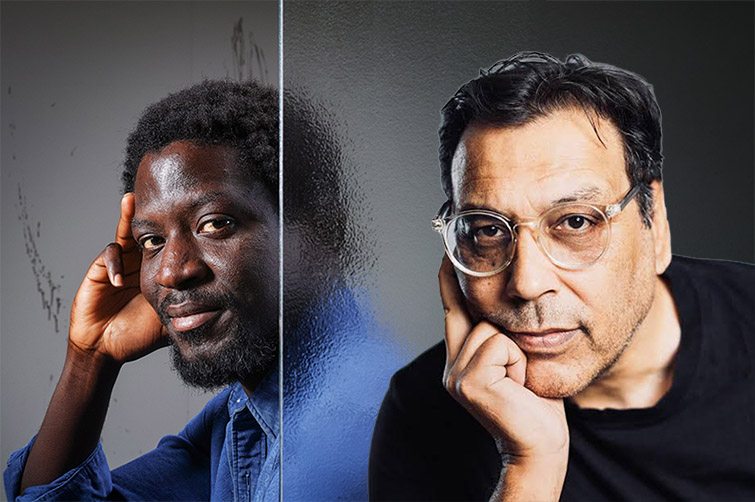 Internationally recognised artist Ibrahim Mahama and scholar Dr Ashraf Jamal will join the University of the Free State’s International Institute of the Arts as Artists-in-Residence in 2026.
The International Institute of the Arts (IIA) at the University of the Free State (UFS) will welcome two internationally respected voices in contemporary art as Artists-in-Residence in 2026 – Ghanaian artist Ibrahim Mahama and South African scholar and cultural commentator Dr Ashraf Jamal.
Prof Alexander Johnson, Director of the IIA, says their residencies mark an important moment for the institute, as it continues to strengthen global artistic dialogue while advancing the UFS’ commitment to shaping responsible societal futures through critical knowledge and creative practice.
Prof Vasu Reddy, Deputy Vice-Chancellor: Research, Innovation and Postgraduate Studies, echoes these sentiments, “These residencies affirm our commitment to positioning the arts as a critical space for global dialogue where creative practice meets rigorous intellectual enquiry.”
Mahama, one of the most influential contemporary artists working today, will begin his residency at the end of March 2026. Known for his monumental installations made from repurposed materials such as jute sacks, wood, and paper, his work explores the histories embedded in everyday objects. Through these materials, he traces the often-overlooked narratives of labour, migration, trade, and memory that shape the global economy.
Working between Accra and Tamale in Ghana, Mahama’s practice is deeply collaborative. His projects frequently involve artisans, architects, and communities, transforming artistic production into a shared process of storytelling and reflection. Beyond the gallery space, he has established several major cultural initiatives in northern Ghana, including the Savannah Centre for Contemporary Art (SCCA), Red Clay Studio and research complex, and Nkrumah Volini – a repurposed grain silo that now functions as a cultural and educational space.
Mahama’s work has been widely exhibited at leading institutions and international exhibitions, including the Centre Pompidou, the Venice Biennale, the Bienal de São Paulo, and documenta 14. More recent presentations include the Barbican Centre in London, Fruitmarket in Edinburgh, and Kunsthalle Wien. His many accolades include being named the Principal Prince Claus Laureate in 2020 and receiving the inaugural Sam Gilliam Award in 2024.
Prof Reddy affirms: “Ibrahim Mahama’s practice invites us to rethink the histories embedded in everyday materials, reminding us that art can illuminate stories that shape our shared experience of the world we inhabit.”
The residency will open on 31 March 2026 with a public meeting and conversation with Mahama, chaired by Prof Vasu Reddy.
From April 2026, the institute will also host Dr Ashraf Jamal, a respected scholar, writer, and cultural commentator whose work spans visual art, cultural studies, and African creative knowledge systems.
Dr Jamal is currently affiliated with the Visual Identities in Art and Design Research Centre (VIAD) at the University of Johannesburg. His research explores contemporary African art, the African diaspora, and global cultural relations – areas that resonate strongly with the IIA’s focus on decolonial scholarship and African-centred knowledge.
Through books, essays, and public lectures presented at institutions around the world, Dr Jamal has developed a body of work that bridges academic and public discourse. His writing has contributed significantly to conversations about African art and cultural production, making complex ideas accessible to broader audiences while maintaining rigorous intellectual engagement.
During his residency at the UFS, Dr Jamal will contribute to the academic programme of the Department of Art History and Image Studies. His engagements will include lectures, seminars, and public discussions, as well as the development of new research publications.
“Dr Jamal brings a depth of scholarship that bridges academic and public discourse, enriching our understanding of African creative knowledge within broader global conversations,” says Prof Reddy.
Together, the residencies of Mahama and Dr Jamal reflect the International Institute of the Arts’ commitment to intellectual excellence, critical enquiry, and the advancement of African creative knowledge. By bringing internationally recognised practitioners and thinkers to Bloemfontein, the institute creates opportunities for students, scholars, and artists to engage directly with ideas shaping contemporary art and society.
Prof Reddy emphasised: “The International Institute of the Arts continues to be a vital hub for fostering innovative thinking and creative practice, connecting our university to leading voices shaping contemporary art.”
These engagements also highlight the role of the arts in imagining new possibilities for society. Through dialogue, research, and creative collaboration, the institute continues to contribute to a growing network of artists and thinkers working to understand the past, respond to the present, and shape more responsible futures.
Further details about public events and engagements linked to the residencies will be shared on the IIA’s official communication platforms.