14 October 2026
|
Story Prof Narnia Bohler-Muller
|
Photo Andre Damons
 Prof Narnia Bohler-Muller, Research Theme Leader: Flourishing Life, Directorate Research Development, University of the Free State
Opinion article by Prof Narnia Bohler-Muller, Research Theme Leader: Flourishing Life, University of the Free State
There is a habit of speaking about local government elections as the lesser poll, a mere rehearsal for the national and provincial contests. I want to argue the opposite. It is at the municipal scale that the Constitution touches the skin: in the water that does or does not come out of the tap, the refuse that is or is not collected, the streetlight that makes the walk home safe for a woman at dusk, the road that stays passable in the rain. If flourishing has an address, it is a ward.
By flourishing I do not mean comfort, or happiness, or private success. I mean the relational conditions under which a person can go on becoming: the web of care, recognition and material provision that ubuntu has always understood as the ground of personhood. We become persons through other persons and, I would add, through the institutions that persons build together. When those institutions fail, the damage reaches beyond a service to the web itself. This is what I have called flourishing denied: the tearing of the relations that make a dignified life possible.
The numbers are a verdict
The evidence of tearing is not hard to find. In the Auditor-General’s
consolidated report on local government for 2024–25, only 39 of the country’s 257 municipalities received a clean audit; in the Free State, where I work, not one did. Behind each of those findings stands a household waiting for water, for a repaired sewer, or for an answer.
It is no surprise that so many have turned away. In 2021 fewer than 46% of registered voters cast a ballot, the lowest turnout of the democratic era. The HSRC’s most recent Voter Participation Survey, conducted for the Electoral Commission, reportedly found that only 36% of South Africans now regard democracy as preferable to any other form of government, and that only 17% are satisfied with how it works. I do not read these numbers as apathy. They are a verdict, delivered by people who were promised a better life and handed a queue.
Yet abstention, which feels like refusal, functions as surrender. A council is elected whether or not we attend, and it is elected by those who do; the fewer who come, the more cheaply a ward is won and the less a councillor has to fear. Withdrawal releases the negligent. And it repeats, at the level of the citizen, the very tearing I have described.
A badge of dignity and of personhood
Section 19 of our Constitution gives every adult citizen the right to vote, and section 1 places universal adult suffrage among the founding values of the Republic, expressly to ensure accountability, responsiveness and openness. Section 152 then tells us what local government is for: democratic and accountable government for local communities, sustainable services, social and economic development, a safe and healthy environment, and the involvement of communities in their own governance. Read together, these provisions describe the conditions of flourishing, and they say who is meant to hold those conditions in place. We are.
In August v Electoral Commission, the 1999 judgment that secured the vote for prisoners, Justice Albie Sachs wrote that the vote of every citizen is “a badge of dignity and of personhood”, and that it says, quite literally, that everybody counts. He went on to observe that the franchise declares our belonging, rich and poor alike, to one nation whose destinies are bound together. That is ubuntu written in the grammar of the franchise. The ballot is an act of relation: I mark it for the neighbour whose tap is dry even when mine is not, for the child who cannot yet vote, for those who will inherit the town we leave them.
None of this makes voting sufficient. A cross on a ballot every five years does not repair a reservoir. The same constitutional order that gives us the vote expects us to be present between elections: in ward committees, in the hearings on the municipal budget and the integrated development plan, in the unglamorous labour of asking where the money went. Voting is the threshold of that work, and it is hard to hold to account a council one declined to choose.
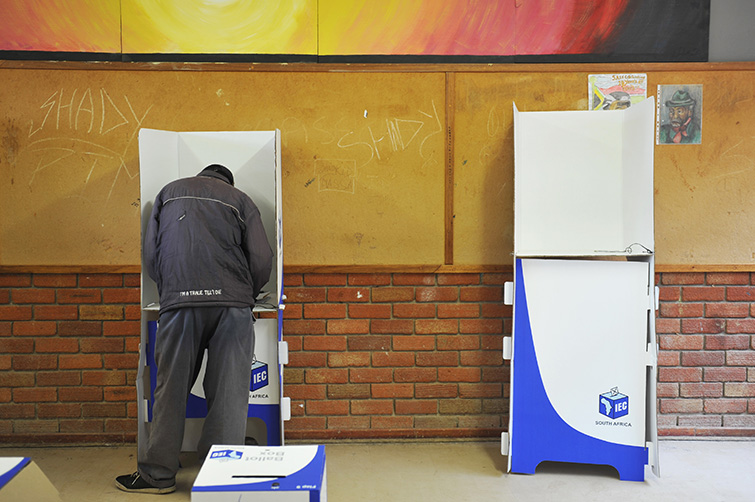
Democracy in South Africa is unfinished, and I have come to think that this is not only its wound but its promise. To be unfinished is to be still becoming. More than 29 million of us are on the voters’ roll, among them some 754 000 who registered for the first time during the June and August registration weekends. Hope, as I understand it, is not a mood that descends when circumstances improve. It is a practice, something done with the body, in a queue, alongside strangers who turn out to be neighbours.
Justice Sachs was right that everybody counts.
On Wednesday 4 November the stations open at seven in the morning and close at nine at night. The question is whether we will consent to be counted.
Prof Bohler-Muller is Professor and Research Theme Leader of the Flourishing Life Research Theme, University of the Free State. She writes in her personal capacity