01 September 2026
|
Story Kelebogile Boleu
|
Photo Supplied
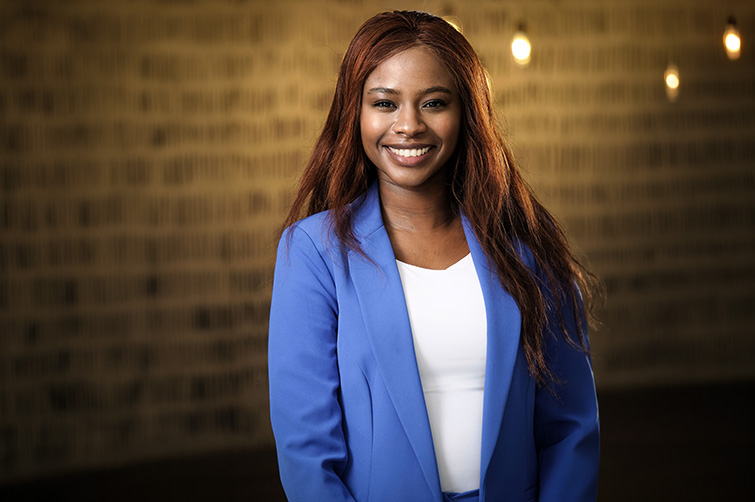 Kelebogile Boleu is a Lecturer in the Department of Criminology, University of the Free State.
Opinion article by Kelebogile Boleu, Lecturer, Department of Criminology, University of the Free State
A language I thought I'd left behind
Parenting is rarely about having all the answers. More often, it is about learning to enter worlds we never expected to inhabit. For parents of Deaf children, that journey extends beyond learning how to parent. It often means learning a new language, discovering a rich cultural identity, and finding ways to respectfully participate in a community that ultimately belongs to our children more than it does to us.
During my undergraduate studies, I chose South African Sign Language (SASL) and Deaf Studies as an elective. I fell in love with both the language and the Deaf community. Unfortunately, I only had one year to study before other academic commitments took over. Like many things we intend to return to, my signing gradually faded into the background of everyday life. I never imagined that years later, what had become a distant memory would become central to my son’s life and, in many ways, to mine.
Like many hearing people who have learnt a little SASL, I enjoyed the occasional opportunity to greet someone and apologise for the limits of my signing. Those brief interactions always reminded me of the generosity of the Deaf community. What I never anticipated was that this would no longer be an occasional encounter. It would become part of my family’s everyday reality.
Why community matters
As parents, we all want the same things for our children. We want them to experience meaningful relationships, to discover opportunities, to develop confidence in who they are, and to find places where they genuinely belong. For my son, that means ensuring he has opportunities to spend time with Deaf children, Deaf adults and Deaf families, not only within his school, but beyond it.
It is necessary to highlight the importance of Deaf role models, not only for Deaf children but also for hearing parents. Meeting Deaf adults who have navigated education, employment, relationships and family life offers something I never can: lived experience. Their stories replace uncertainty with possibility and demonstrate that deafness is not something to overcome, but an identity through which rich and fulfilling lives are lived.
Belonging beyond school
I have come to accept that no matter how committed I am as his mother, I cannot fully understand my son’s lived experience as a Deaf person. I can learn, advocate, create opportunities and walk alongside him, but I cannot speak from the perspective of someone who has lived that experience. That understanding belongs to Deaf people themselves, which is precisely why their presence in his life matters so deeply.
Recently, someone suggested that it is natural for my son’s sense of community to be centred on his school. While school is undeniably important, I believe his community should be much bigger than the classroom. So, I intentionally seek opportunities to build relationships beyond the school gates. We spend time with Deaf children and adults in ordinary spaces such as playing sport, sharing ice cream in the park, enjoying picnics and simply spending time together as families. These moments may appear unremarkable, but they are where belonging is nurtured.
Equally important are the Deaf young people and adults who quietly expand what my son believes is possible. Every conversation, every shared experience and every example of a life well-lived helps him imagine his own future with greater confidence. Representation is not simply about seeing someone who looks like you; it is about recognising that your aspirations are both valid and achievable.
Just being parents
Parenting a Deaf child is not a heroic act. Parenting any child rarely is. What makes parenting extraordinary is the ordinary commitment to love the child in front of us, to nurture who they are rather than who we imagined they might become, and to hold onto hope for a future we cannot fully predict. Parents of Deaf children are no different. We are simply doing what parents have always done: loving intentionally, learning continuously and hoping fiercely.
The HEARTS Project was born from that understanding. It exists because parents need community too. It is built by parents, for parents, recognising that while no one has all the answers, none of us should have to navigate this journey alone. At its core, HEARTS is about relationships, belonging and hope through creating spaces where families are supported, children are affirmed in who they are, and every parent is reminded that they are not walking this path on their own.