23 September 2026
|
Story Motsaathebe Serekoane
|
Photo Supplied
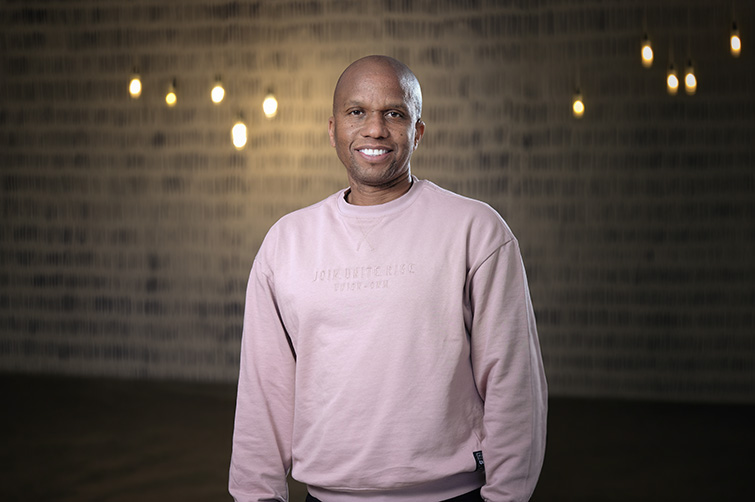 Motsaathebe Serekoane, Department of Anthropology, UFS.
Opinion article by Motsaathebe Serekoane, Department of Anthropology, University of the Free State
The University of the Free State theme for Heritage Month, More Than a Seat at the Table: Diversity, Inclusion and Belonging on Campus is both timely and commendable and reflects thoughtful leadership in choosing a theme that encourages the university community to pause and critically reflect on its transformation journey. At a time when universities are increasingly called upon to move beyond demographic change towards creating environments where all members feel recognised, valued, and connected, the theme challenges us to examine not only who has gained access to the institution, but also who experiences it as a place of genuine belonging. It invites an honest conversation about how far we have come and how much further we still need to travel in building an inclusive university community.
Same space tells a different story for others
The theme resonates strongly with some of the questions I explored in my research. I met the participants in Red Square and invite them to walk the space with me. This walk is more than a physical journey through campus. It is a discursive exercise informed by walking ethnography and sensuous scholarship, encouraging participants to engage with the university landscape through sight, sound, memory, feeling, and reflection. Read alongside the notion of the right to the city, or perhaps in this context the right to a seat at the table, the research explores a fundamental question that often underpins transformation initiatives in higher education: does access necessarily translate into inclusion, parity, and belonging?
Using Red Square as a proverbial table, I argue that it is more than an open public space where everyone who enters automatically finds a seat. It is a space where histories, identities, memories, aspirations, and power relations intersect. For some participants, the square evokes feelings of inclusion, connection, and possibility. The trees, water features, open green spaces, and opportunities for social interaction create a sense of community and belonging. Several participants describe Red Square as a place of encounter, dialogue, intellectual exchange, and social connection, a space that allows them to pause, reflect, meet others, and participate in the life of the university.
Yet the same space tells a different story for others. Participants’ reflections reveal that belonging is often interrupted by the symbolic landscape of the university. While nature and social interaction may foster feelings of comfort and inclusion, some participants encounter building names, monuments, and memorials that remind them of exclusionary histories. One participant reflected that the sense of harmony experienced while walking through the square was disrupted when confronted with symbols serving as reminders that they “do not truly belong”. Such reflections suggest that access to a space does not always translate into a sense of ownership over it.
The reflections reveal that belonging is far more than physical presence. Participants describe belonging as a social and cultural process that is co-created through interactions with others, shaped by familiarity, equity, accessibility, recognition, and the opportunity to connect with something meaningful. They suggest that belonging emerges when people feel seen, heard, respected, and represented within the institutional environment. In this sense, belonging is not something that can be given through policy alone; it is produced through everyday experiences and relationships.
Moving beyond representation towards participation
At the same time, participants identify several structural, cultural, and interpersonal barriers that continue to hinder meaningful inclusion. Some spoke of the lingering influence of colonial and apartheid symbols, building names, and monuments that continue to shape how people relate to campus spaces. Others observed patterns of self-segregation among students, where social interactions often remain confined within racial or cultural groups. These experiences raise concerns about whether diversity has translated into meaningful encounters across difference. They point to a university community that may be demographically diverse but still grappling with the challenge of cultivating deeper forms of social cohesion and belonging.
Importantly, the participants do not merely critique; they imagine alternatives. Their reflections call for a university that moves beyond representation towards participation (akin to more than just a seat at the table). They advocate for more inclusive symbols and narratives, greater recognition of diverse histories and knowledge systems, improved accessibility, continued dialogue across difference, and spaces that encourage interaction among people from different backgrounds. Many argue that physical spaces should not simply commemorate the past but should actively contribute to creating a more equitable and socially just space.
What emerges from these reflections is a powerful challenge to the assumption that diversity alone is sufficient. The participants remind us that having a seat at the table is not the same as feeling welcome at the table, being recognised at the table, or helping shape what happens around it. As Heritage Month invites the UFS to reflect on diversity, inclusion, and belonging, their voices prompt us to ask more profound questions: Whose table is it? Whose histories are visible around it? Who feels entitled to speak at it? And what would it take for every member of our university community not merely to occupy a seat, but to experience the institution as a place where they genuinely belong? After all, only a Kovsie knows the feeling.
Disclaimer: This research was part of Serekoane’s PhD study. He writes in his personal capacity and does not necessarily represent the views or position of the University of the Free State.