Latest News Archive
Please select Category, Year, and then Month to display items
26 August 2026
|
Story Teboho Mositi
|
Photo Asanda Mahlinza
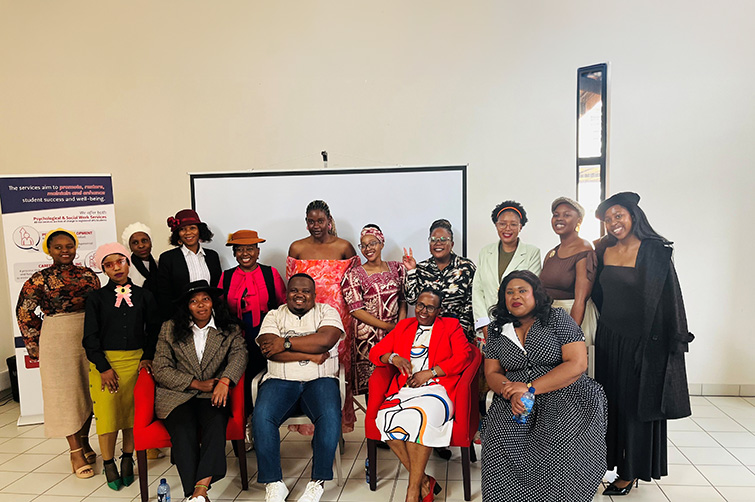 Left to right: Cindi Mzizi, Dr Gcina Mtengwane, Makgaetsi Lebitsa, and Stella Mzobothi during a gender-based violence (GBV) dialogue at UFS Qwaqwa Campus.
The Directorate of Health and Wellness: Social Work Services at the University of the Free State (UFS) Qwaqwa Campus, in collaboration with the Department of Health and Qholaqhwe Advice Centre, hosted its annual gender-based violence (GBV) awareness campaign on 21 August 2026 at Fulufhelo Residence.
The dialogue formed part of the University’s ongoing commitment to fostering a safe, inclusive, and socially conscious campus environment. It also provided an opportunity to raise awareness about GBV, encourage meaningful conversations, and promote available support services for students and the broader campus community.
Held under the theme ‘Higher Learning, Higher Standards and Zero GBV ’, the engagement aimed to raise awareness, promote dialogue, and provide vital support services to students.
This event brought together representatives from University student governance structures, academics, local non-governmental organisations (NGOs), and government entities, all united in the fight against GBV.
The dialogue also served to educate students about the available support structures and the appropriate channels to follow when reporting or seeking help in cases of GBV. Through collaboration and active engagement, the UFS continues to prioritise the well-being, dignity, and safety of all students and staff.
Addressing the vulnerabilities that can place students at risk of GBV
Dr Gcina Mtengwane, Community Development lecturer in the Centre for Gender and Africa Studies on the Qwaqwa Campus, emphasised that material need can create vulnerability, while dependence can further trap survivors of GBV, rape, and other forms of abuse. He explained that, in many cases, young women constitute a significant proportion of victims, highlighting a broader societal concern. “We all come from communities, and communities shape who we are and the realities that we find in higher education,” he said.
Dr Mtengwane stressed the need for advocacy that goes beyond encouraging survivors to report incidents, calling instead for solutions that address and eliminate the underlying conditions that create gross vulnerability and dependence among young women in higher education.
Cindi Mzizi, English Academic Facilitator in the Department of English, highlighted the role of financial vulnerability in the ‘blesser–blessee’ phenomenon among students. “Are we saying women who are financially stable don’t become blessees ? It becomes a choice and a need,” Mzizi said. She noted that students waiting for funding may experience financial pressure when they see their peers progressing. “We all come from different backgrounds. We don’t see what happens behind the cameras; we only see the lifestyle,” she said.
Mokgadi Sathekge, Arts and Culture representative on the Campus Student Representative Council (CSRC), highlighted the importance of such dialogues in understanding the causes behind financial need and ‘blesser–blessee’ relationships. “One of the panellists had highlighted how delays in the disbursement of bursary funds, such as NSFAS [the National Student Financial Aid Scheme], may contribute to students’ financial vulnerability,” Sathekge said.
Tshepo Moloi, a Bachelor of Social Science final-year student, emphasised the importance of creating safe spaces on campus. “It taught me how to be more aware, how to respect others, and how to be a better supporter if someone opens up,” Moloi said, noting that GBV affects students in residences and social spaces, making participation in GBV dialogues even more important. “For me, it was important to attend because GBV affects all of us as students. I wanted to learn more and not just assume I know.”
UFS Social Work Services, through its collaboration with Qholaqhwe Advice Centre and the Department of Health, has created a welcoming space where students can access essential support and resources when experiencing abuse or GBV, reinforcing the UFS’ commitment to fostering a safe and supportive environment for all.