Latest News Archive
Please select Category, Year, and then Month to display items
17 September 2026
|
Story Prof Narnia Bohler-Muller
|
Photo Supplied
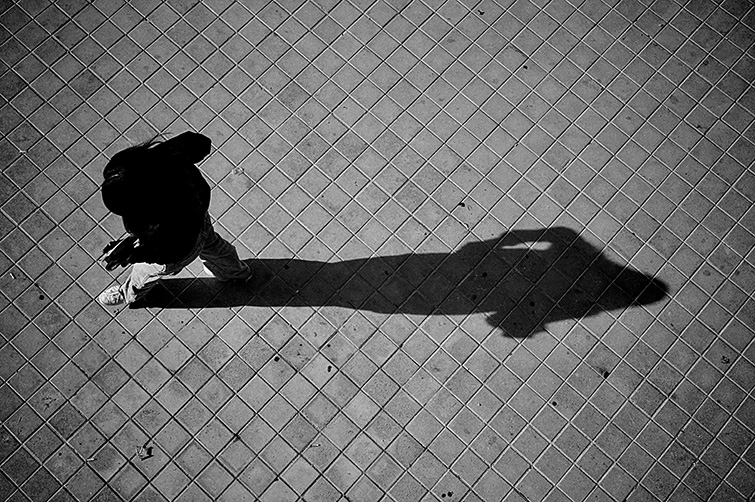 Photo for illustration: The South African Police Service has urged women around Kempton Park not to walk or run alone.
Opinion article by Prof Narnia Bohler-Muller, Research Theme Leader: Flourishing Life, Directorate Research Development, University of the Free State
Elizabeth “Tsontso” Moselakgomo went for a run after work. It is one of the most ordinary freedoms. To leave your home, to move through your own neighbourhood, to come back. She did not come back. Her eight-year-old daughter raised the alarm. Her body was found behind a hotel in Rhodesfield, Kempton Park.
Since mid-July, women’s bodies have been found across Ekurhuleni beside the R21, in the veld at Olifantsfontein, in a river at Clayville, on a roadside in KwaThema and in Dawn Park – bringing the total to nine. Only three of these women have been identified. Police say four were sexually assaulted.
Notice the grammar of the police reports. The women “were found”. The passive voice hides someone. The women on those roadsides did not simply come to lie there, partially clothed, in full view. Someone left them. Public space has become not only the scene of this violence but its stage. A woman’s body left beside a highway speaks to every woman, and the message is an old one: this is not your space.
The room has never been safe
The South African Police Service has urged women around Kempton Park not to walk or run alone, to avoid secluded spaces and to exercise in groups. Any woman would be wise to heed this advice. But women have seen this bargain before, as our safety is purchased with our freedom. A curfew is drawn around women’s bodies, while whoever threatens them moves freely. And women are sent home, as though home were a refuge. It is not. The HSRC’s National GBV Study of 2022 found that more than 35% of women over 18 have experienced physical or sexual violence in their lifetime, mostly at the hands of intimate partners. We are told to leave the street for the room. The room has never been safe.
In 1989, writing after a woman was stabbed to death alone in a London train compartment, Gill Valentine mapped a geography of women’s fear. She showed how blaming victims for being in the “wrong” place teaches all women to fear places and to shrink their lives to fit. Valentine called women’s inhibited use of space “a spatial expression of patriarchy”. Thirty-seven years on, the advice from Kempton Park could serve as her case study.
Judith Butler sharpens the stakes. Frames of War (2009) asks when a life is grievable and shows that grief is unevenly shared. Some deaths are framed as wounds to a whole society, while others barely register. Women lying unnamed in a mortuary while police appeal to families for help is a question of grievability before it is a question of forensics. It asks which lives our institutions are built to notice. In Notes Toward a Performative Theory of Assembly (2015), Butler writes of a plural right to appear: bodies claiming the street together and, by appearing, demanding a liveable life.
The right to be free from all forms of violence
That right cuts both ways. When runners come together to honour the dead, they exercise it with dignity. But a right to appear that a woman may exercise only in company, only in daylight, and only on approved routes is not a right. It is a permission. Solidarity among women is precious, but it cannot replace the state’s duty to make the street safe for a woman who simply wants to walk or run alone.
Our Constitution leaves no room for evasion. Section 12(1)(c) guarantees everyone the right to be free from all forms of violence “from either public or private sources”. Street and bedroom contained in one clause. The duty is that of the state. It is not ours to discharge by staying indoors.
Nor can anyone claim surprise. In November 2025, during South Africa’s G20 Presidency, in which I served as Co-Chair of Women20, gender-based violence and femicide were declared a national disaster after the Women’s Shutdown and a petition of more than a million signatures. Women’s organising won that declaration. Ten months later, a declaration is only as good as the road it reaches. Can a woman run beside the R21 at the end of a working day and come home? The answer may be no.
What kind of society requires women to run in groups
My work calls this flourishing denied. To flourish is to be able to become: to move, imagine a life and pursue it. If umuntu ngumuntu ngabantu, then the street, the park and the taxi rank are where that becoming happens. Drucilla Cornell, in The Imaginary Domain (1995), held that becoming a person requires bodily integrity and the protection of an imaginary domain: the psychic and moral space in which we imagine who we might become. Fear invades that space. A woman who must plan her route and her hour around the possibility of being killed has already lost her freedom, whether or not anyone touches her. Multiply that by millions of women, and a society is shrinking half of itself.
Urgency requires more than condolence. It requires safety to be treated as public infrastructure, not private discipline. Lighting that works, open land that is maintained and watched, and patrols. Ekurhuleni has promised more metro police visibility in Kempton Park and Rhodesfield in the early mornings and late afternoons; that must become permanent, not fade with the headlines. It requires systems that connect cases before the public does. The Clayville death was drawn into the investigation only after police went back through their stations’ cases, and residents are right to ask why they were not warned sooner.
The Acting Minister of Police called the thought of someone leaving for a run and never returning “too unbearable to think about”. It is. So stop asking women to carry it. The question is not whether women should run in groups. It is what kind of society requires them to do so. Until a woman can go for a run after work and come home to her daughter, we have not answered the disaster we declared. We have only described it.