Latest News Archive
Please select Category, Year, and then Month to display items
17 September 2026
|
Story Prof Mpumelelo E Ncube
|
Photo Supplied
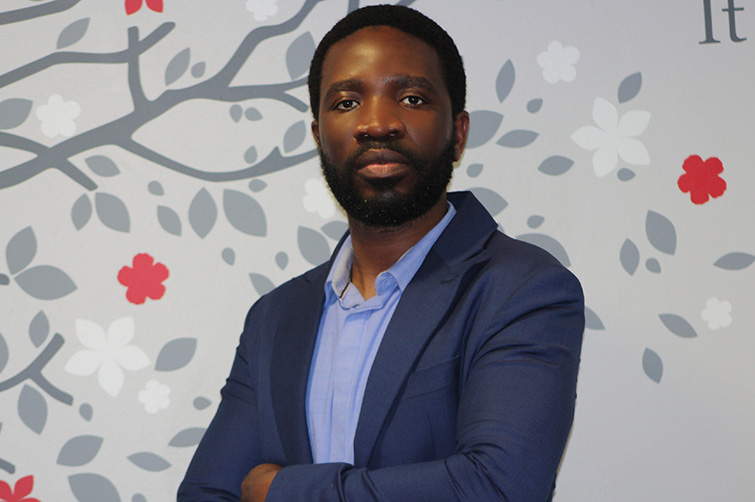 Prof Mpumelelo E Ncube, Department of Social Work, University of the Free State.
Opinion article by Prof Mpumelelo E Ncube, Department of Social Work, University of the Free State
The symposium asked how a country with such enormous need for social services can have qualified social workers who cannot find employment. Since then, however, I have been troubled by a broader question: What is an educated population supposed to do for a developing society ?
We need more from education than employable people
Graduate unemployment is a serious socioeconomic problem. When graduates cannot find work, something has clearly gone wrong. Yet our concern may conceal a deeper assumption: that the ultimate purpose of education is employment. Education certainly has an economic function. Employment generates income, taxes and participation. But a developing society must surely expect more from education than employable people.
Consider South Africa’s trajectory. Public university enrolment grew from about 495 000 students in 1994 to approximately 1.08 million in 2022. Scientific publications increased from fewer than 4 000 in 2000 to more than 27 000 in 2022. South Africa therefore possesses substantially greater intellectual and scientific capability than three decades ago.
Yet manufacturing’s contribution to GDP declined from approximately 21% in 1994 to around 12-13%, while national expenditure on research and development stood at only 0.62% of GDP in 2023/24.
These trends should not be simplistically connected. Manufacturing decline reflects complex forces including economic policy, market volatility, globalisation, investment patterns, energy constraints, infrastructure failures and technological change. South Africa has also developed important capabilities in renewable energy, global business services, fintech, biotechnology and digital services.
Nevertheless, a legitimate question remains: Has the growth of our productive, technological and innovative capacity been commensurate with the extraordinary expansion of our educational and intellectual capacity?
Universities can produce knowledge but cannot industrialise a country alone
Suppose South Africa created enough jobs tomorrow for every unemployed graduate. It would be a major achievement. But would South Africa necessarily become substantially more developed? Not necessarily.
If graduates entered essentially the same economic structure; if we remained dependent on technologies and high-value products developed elsewhere; and if research struggled to become innovation, production and solutions to persistent social problems, we might solve graduate unemployment without solving the deeper developmental problem.
This shifts the question towards those of us who are already educated and employed. Beyond performing our jobs and paying taxes, what developmental value is our education producing? What knowledge are we generating? What problems are we solving? What industries are we helping to create? What institutions are we strengthening?
Universities can produce knowledge, but they cannot industrialise a country alone. Graduates can acquire sophisticated capabilities, but those capabilities require economic and institutional systems through which they can be deployed. Knowledge does not automatically become technology, enterprises, effective institutions or solutions.
The developmental chain therefore demands greater attention: education should expand our capacity to generate knowledge; knowledge should drive innovation; innovation should strengthen productive capacity; and greater productive capacity should ultimately contribute to national development.
What are we doing with all the knowledge we produce?
Employment matters within that chain, but it cannot be its endpoint. Nor should this argument become an instruction to unemployed graduates to “create their own jobs”. Structural unemployment cannot be transferred from governments, economies and institutions onto individuals. The state remains responsible for creating conditions for investment, innovation, industrialisation and meaningful employment.
The relationship must instead be symbiotic. Development creates opportunities for educated people; educated people, in turn, should generate knowledge, innovation, institutions and productive capacity that propel further development.
That returns me to the social work symposium. Perhaps unemployed social workers in a society overwhelmed by social problems reveal something larger: South Africa possesses human capability that its developmental architecture struggles to deploy effectively.
We should remain deeply concerned about graduate unemployment. But after three decades of expanded higher education, we must ask a bigger question than simply where the jobs are: What is South Africa doing with all the knowledge it has produced?
• Mpumelelo Ncube, an Associate Professor of Social Work and President of ASASWE, writes in his personal capacity.