11 August 2026
|
Story Prof Alice Ncube
|
Photo Supplied
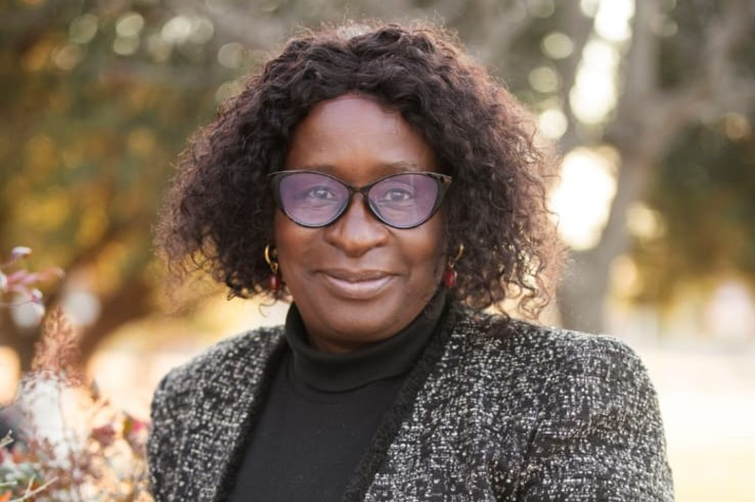 Prof Alice Ncube, Disaster Management Training and Education Centre for Africa (DiMTEC), University of the Free State.
As South Africa commemorates Women’s Month, we celebrate the achievements, resilience and contributions of women across society. However, this period must also provide an opportunity for deeper reflection on one of the most persistent threats facing women and children: Gender-Based Violence and Femicide (GBVF).
GBVF is often described as a social challenge, a criminal justice concern or a public health crisis. While these perspectives are important, they do not fully capture the scale, persistence and devastating consequences of the problem. Gender-based violence can also be understood as a slow-onset disaster, one that unfolds over time, gradually eroding safety, dignity, well-being and opportunities for millions of people.
Unlike sudden disasters such as floods and wildfires, GBVF does not always generate immediate emergency mobilisation. Yet its effects are equally profound. It destroys lives, affects families and communities, places pressure on healthcare and justice systems, and leaves long-term emotional, social and economic consequences. Understanding GBVF as a slow-onset disaster is not a metaphor; it reflects the reality that violence against women and girls is a widespread human rights, public health and societal emergency requiring prevention, preparedness, coordinated response and healing.
Viewing GBVF through a disaster risk reduction lens
Disaster management is built on a simple but powerful principle: preventing or mitigating hazards is better than responding after devastation has occurred. It focuses on understanding risks, reducing vulnerabilities, strengthening preparedness and building resilience before hazards cause widespread impacts. This approach is highly relevant to GBVF because violence does not occur in isolation nor suddenly like floods and wildfires. It is a culmination of broader social, economic and institutional conditions, including gender inequality, harmful social norms, poverty, economic dependency and weaknesses within support systems. Applying a disaster risk reduction perspective shifts the focus from responding only after violence occurs towards identifying and reducing the conditions that allow violence to happen.
The question therefore becomes not only: How do we respond after violence has occurred? but also: How do we prevent violence before it occurs?
This preventative approach aligns with the Sendai Framework for Disaster Risk Reduction (2015-2030), which emphasises understanding risk, strengthening governance, investing in resilience and taking early action. It also complements South Africa’s National Strategic Plan on Gender-Based Violence and Femicide (2020-2030), which recognises that addressing GBVF requires a coordinated, multi-sectoral approach involving government, communities, civil society, researchers and service providers.
From reactive response to anticipatory action
One of the greatest challenges in addressing GBVF is that action often occurs only after death, or harm has already happened. Society responds after a woman has been assaulted, after a child has been sexually molested, or after a family has lost a loved one. Disaster management has long recognised that effective risk reduction requires prevention, mitigation and early action not only emergency response. The same principle must guide the fight against GBVF.
Modern disaster management increasingly emphasises Anticipatory Action and Early Action, enabling institutions and communities to act before a crisis reaches its peak. Although these approaches have traditionally been applied to climate-related hazards such as floods, droughts and cyclones, the underlying principles offer valuable lessons for addressing GBVF.
In the context of GBVF, anticipatory thinking means recognising warning signs and underlying vulnerabilities before tragedy occurs. These include harmful gender norms, escalating patterns of violence, economic dependency, social isolation, limited access to support services and institutional failures that leave survivors vulnerable. Rather than waiting for violence to occur, prevention requires investment in education, community awareness, survivor support services, economic empowerment and coordinated interventions that reduce risk before violence escalates.
Just as disaster managers do not wait for a flood to destroy a community before activating preparedness measures, society should not wait until another woman, or child becomes a victim before strengthening protection systems. Integrating anticipatory thinking into GBVF prevention would encourage earlier interventions, stronger community resilience and greater collaboration between government, universities, healthcare providers, justice institutions and civil society organisations.
A call for prevention, justice and healing
Women’s Month provides an opportunity not only to celebrate women’s achievements but also to recommit we to creating safer communities where women and children can live free from violence and fear. The measure of our progress should not only be how effectively we respond after violence occurs, but also how successful we are in preventing violence from happening in the first place. GBVF requires the same urgency, coordination and commitment that society applies to other threats to human life. Prevention must come before tragedy. Justice must follow when harm occurs. Healing must continue for survivors, families and communities.
By bringing together disaster risk reduction and forensic science, South Africa can strengthen its response to GBVF moving from reaction towards prevention, from fragmentation towards coordination, and from despair towards resilience.
“Every life protected from violence represents a success of prevention. Every life lost reminds us of the work that remains.”
- Prof Ncube is part of the African Union Commission (AUC)-Africa Science and Technology (Af-STAG) Board on Disaster Risk Reduction DRR, Department of Agriculture, Rural Development, Blue Economy, and Sustainable Environment (ARBE), Disaster Risk Reduction (DRR) Unit, Addis Ababa, Ethiopia. She is also part of the Forecast-based Warning, Analysis and Response Network (FOREWARN EXPERT GROUP) Charter in Zimbabwe.