18 August 2026
|
Story Siqhamo Hlubi Jama
|
Photo Supplied
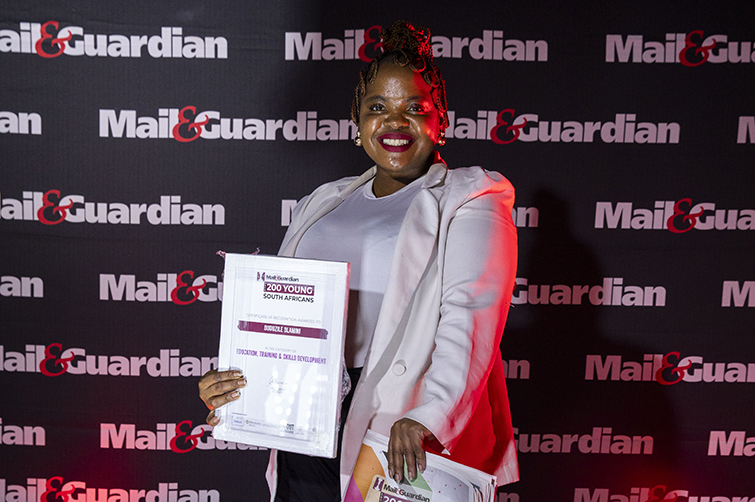 Duduzile Dlamini, nGAP Journalism Lecturer at the University of the Free State, was named in the Mail & Guardian's 200 Young South Africans 2026 in the Education, Training and Skills Development category.
Duduzile Dlamini did not set out to become a lecturer. She wanted to be a magazine editor. But when her mentor and Head of the Department of Communication Science, Prof Nyasha Mboti, showed her what it meant to shape the next generation of journalists rather than simply join their ranks, she changed direction and has not looked back since.
At 32, she is an nGAP Journalism lecturer at the University of the Free State and a PhD candidate in Gender Studies at the University of KwaZulu-Natal. In August 2026, the Mail & Guardian named her among its 200 Young South Africans – one of the most credible markers of emerging leadership and impact in the country. The recognition places her in a cohort assembled in a year of particular significance: fifty years after the 1976 youth uprising, and twenty years since the Mail & Guardian first launched the project.
"To be recognised in this year's cohort is a humbling experience," Dlamini reflects, "affirming that I am on the right track and I should continue to be a transformation agent in my field."
Teaching that leaves the classroom
Dlamini holds a master's degree in fundamental communication and brings an approach to her teaching that refuses to stop at theory. Her students gain hands-on newsroom experience through live partnerships with KovsieFM, OFM, and the SABC in Bloemfontein, working alongside media professionals and navigating the pressures and decisions of real journalism before they graduate. This approach earned her a nomination for the University of the Free State's Innovation in Learning and Teaching Award.
For Dlamini, this is not simply good pedagogy. It is an expression of a conviction that journalism education must produce practitioners who are technically skilled, ethically grounded, and capable of serving communities that need them, not only markets that will pay them.
Her research reflects the same commitment. She is an interdisciplinary scholar whose work sits at the intersection of media, gender, leadership, and higher education. Her 2024 paper in Communitas, ‘See me and hear me: black South African women using YouTube as a site of belonging and visibility’, examines how digital platforms are being used to claim space and presence outside of traditional institutional structures. Three further articles are currently under review for publication.
Building beyond the university
Dlamini's impact extends well beyond the Bloemfontein Campus. She co-founded Abatsha Force of Change, a youth-led movement advocating for electoral reform and civic participation. She established Friends in Literature, a book club designed to cultivate critical dialogue and a reading culture among young people. And she created Our Stokvel, a crowdfunding initiative rooted in the values of ubuntu and collective empowerment.
Taken together, these initiatives reflect a philosophy that sees education, public policy, and community activism not as separate vocations, but as dimensions of a single, integrated commitment to change.
For the University of the Free State, whose North Star is the creation of responsible societal futures, Dlamini's recognition affirms something the institution has long believed: that the academics and practitioners it supports are not simply preparing for the future. They are already building it.