30 July 2026
|
Story Vuyelwa Mbebe
|
Photo Supplied
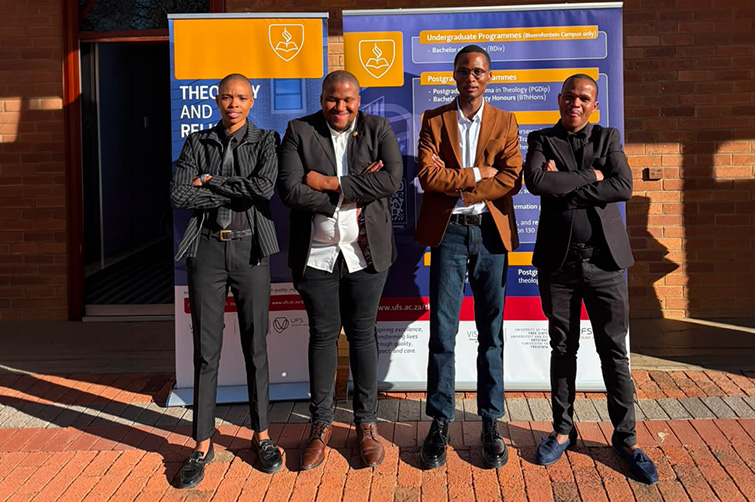 Scholars, researchers, postgraduate students, and practitioners at the UFS ‘Religion and Gender: Queer Spiritualities and the Search for Belonging’ conference.
The University of the Free State’s (UFS) Department of Religion Studies in the Faculty of Theology and Religion hosted a one-day conference on Religion and Gender: Queer Spiritualities and the Search for Belonging on 17 July 2026 at the Bloemfontein Campus. The event brought together scholars, researchers, postgraduate students, and practitioners to explore the intersections of religion, gender, identity, and spirituality, reinforcing the University’s commitment to academic dialogue on issues shaping society.
Expanding on the motivation behind the conference, Dr Yuvan M Shunmugam, Lecturer: Biblical and Religious Studies, said the event was inspired by the recognition that “questions of religion, gender, sexuality, and belonging are among the most pressing issues facing contemporary societies”. He said the conference sought to provide “an academically rigorous platform where scholars, religious practitioners, and community voices could critically engage these complexities” through thoughtful, evidence-based dialogue.
The conference provided an interdisciplinary platform for scholars to critically engage with questions surrounding faith, identity, belonging, and spirituality in contemporary society. Throughout the day, participants examined how religion and gender intersect across diverse social, cultural, and theological contexts, while reflecting on the role of faith communities in responding to changing societal realities.
The conference highlighted the value of creating academic spaces where complex and, at times, contested issues can be explored through rigorous scholarship, respectful dialogue, and critical reflection. Discussions considered themes such as identity, belonging, lived religion, Christian ethics, disability and spirituality, African religious traditions, decolonial approaches to theology, and inclusive religious education. Together, these conversations demonstrated the breadth of contemporary research taking place within the field of religion studies.
A recurring theme throughout the conference was the human search for belonging and the ways in which religious communities influence individual and collective identities. Presenters explored how experiences of acceptance, exclusion, and participation shape people’s spiritual lives, while encouraging thoughtful engagement with the evolving relationship between faith, gender, and society. The discussions reflected the conference’s broader objective of fostering meaningful scholarly engagement with lived experiences and emerging theological perspectives.
In addition to the presentations, each session was followed by lively discussion and academic critique, enabling delegates to exchange ideas, challenge assumptions, and strengthen ongoing research. These engagements underscored the importance of universities as spaces where diverse perspectives can be examined through evidence-based scholarship and respectful intellectual discourse.
Reflecting on one of the conference’s key outcomes, Dr Shunmugam said one of the most significant insights was that “queer spirituality cannot simply be understood as existing outside religion”. Instead, he noted that many individuals actively reinterpret and reimagine their religious traditions in ways that affirm both faith and identity. “Belonging is not merely about institutional acceptance, but about creating spaces where people can participate authentically without having to abandon either their spirituality or their sense of self,” he said.
By convening researchers from different disciplinary backgrounds, the conference reaffirmed the Faculty of Theology and Religion’s commitment to advancing research that responds to contemporary social questions while contributing to broader conversations within theology, religion, and society. It also reflected the University of the Free State’s ongoing commitment to academic excellence, critical inquiry, and meaningful engagement with issues that shape communities both locally and globally.