07 May 2026
|
Story Tshepo Tsotetsi
|
Photo Anthony Mapaura
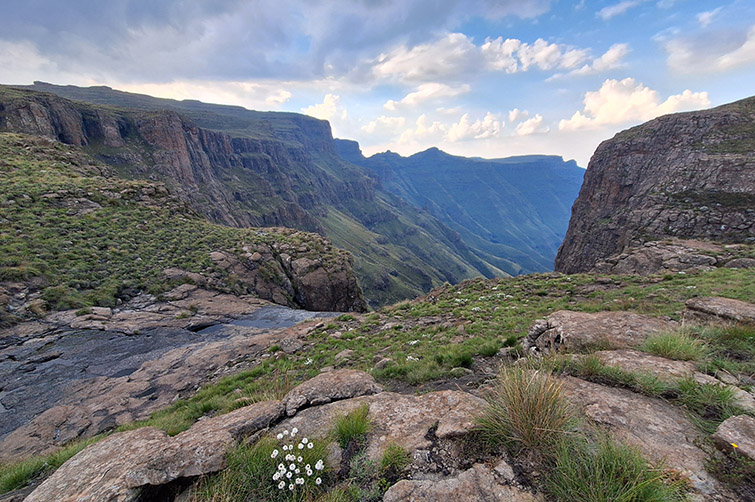 Where mountains meet science: a decade of research shaping the future of African mountain systems.
In the highlands of the Eastern Free State, where mountain landscapes shape both ecology and everyday life, the Afromontane Research Unit (ARU) has spent the past decade building a foundation for research that connects people, place, and the environment.
Established on the University of the Free State Qwaqwa Campus in 2015, the unit has grown from a capacity-building initiative into a recognised centre for African mountain research. Its work is rooted in the simple but powerful idea that mountain systems cannot be understood in isolation. They are living environments where biodiversity, climate, water, and human livelihoods are deeply intertwined.
Over the years, this approach has brought together researchers, communities, and partners from across Southern Africa and beyond. It has also supported a new generation of scholars, while contributing to research that places African mountain regions more firmly on the global map.
As Chair of the ARU Advisory Board, Prof Vasu Reddy, Deputy Vice-Chancellor: Research, Innovation and Postgraduate Studies, says the unit’s strength lies in how it works with others. “Its governance model, rooted in collaboration with traditional leadership, international experts, and local communities, reflects a commitment to co-creation and shared stewardship.”
Now, as the unit moves into its second decade, the focus is shifting.
Shaping the next decade
For Prof Ralph Clark, founding Director of the ARU, the next phase is about deepening impact through stronger science-policy-practitioner interaction for mountains. “Our vision is a future where mountain systems and their inhabitants thrive from a blend of robust science, reasonable policy, and impactful practitionership,” he says.
That vision is shaping a stronger focus on climate change adaptation and resilience, particularly for mountain communities facing increasing vulnerability. At the same time, the unit is looking to expand its use of digital tools, including data-driven approaches that can strengthen how these environments are monitored and understood.
But the direction is not only about technology or research outputs. It is also about connection. By strengthening partnerships across the continent and amplifying the voices of mountain communities, the ARU aims to ensure that its work remains grounded, relevant, and responsive.
While ten years mark an important milestone, the emphasis is firmly on what lies ahead. The unit is positioning itself to play a more active role in shaping how knowledge moves beyond research and to the decisions that affect both landscapes and livelihoods.
In doing so, the ARU is not just studying mountains. It is helping to shape a more sustainable future for the regions and communities that depend on them.