08 May 2026
|
Story Siqhamo Hlubi Jama
|
Photo Supplied
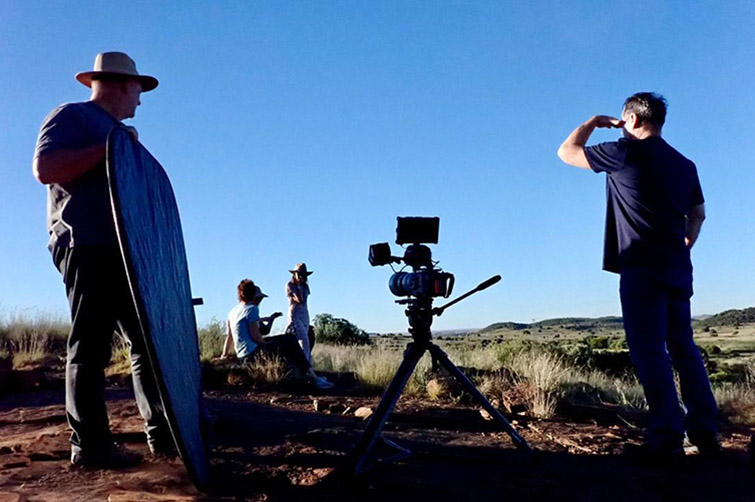 Change is possible when we are not spectators, but drivers. This conviction sat at the heart of In Our Hands, a short documentary that premiered during the 2026 UFS Senate Conference.
Big ideas change nothing on their own. People do.
Change is possible when we are not spectators, but drivers. This conviction sat at the heart of
In Our Hands, a short documentary that premiered during the
2026 UFS Senate Conference. Directed by
Charlene Stanley of
Storytown Productions, the film was introduced by Deputy Vice-Chancellor: Research, Innovation and Postgraduate Studies,
Prof Vasu Reddy, co-chairperson of the Senate Conference and one of the commissioning editors, who reminded senators that “technology is never abstract – it always lands in bodies, in communities, and in futures”.
According to Prof Reddy, “In Our Hands is both a question and a call; what we choose to hold, care for, and act upon. Responsible societal futures speak to a future shaped by human agency, not abstraction.”
Three projects, one question
The documentary weaves together three ecologically connected UFS projects, each asking the same thing: amid geopolitical disruption, accelerating technology, digital entanglement, climate crisis, what can one person do?
Sandile Ndlovu (a postgraduate student in Sociology who is an intern at the ICDF) responded with action. After discovering alarmingly low public awareness around e-waste, he drove a campus initiative that placed electronic waste collection containers on two UFS campuses. “I realised that it starts with me,” he said. “Things can just start from you creating something that sparks an idea.”
Drama and Theatre Arts student Sibahle Mabaso (now a master’s student in Gender Studies) responded through art. Her installation
Feed, Flesh and Buffering, built almost entirely from e-waste, explores digital entanglement and what it costs our humanity.
Prof Melanie Walker and Dr Fenella Somerville
(School of Higher Education Studies) responded through storied pedagogy (a way to learn, teach, and make sense of knowledge), running photo storytelling workshops where students expressed their relationship with the natural world, and discovered values they did not know they held.
Prof Reddy says, “For Stanley, it is clear that her style is deliberate and intimate, placing agency, not spectacle, at the heart of matters that concern all of us. The image of the hands ground global challenges and wicked problems in personal responsibility.”
Small scale, wide ripple
Stanley was deliberate about the film’s visual language, returning repeatedly to the image of hands – sorting waste, reaching out, holding photographs. “Agency, that activity that goes with hands, it shouldn’t stop at thinking and deliberating,” she said.
The post-screening panel drew these themes into the broader debates of the day. When senators asked how to get more students engaged, Mabaso was direct: “You make time for the things that you love. Students need to realise they are stepping into a space where they have a set amount of time to grow. Milk it.” Prof Walker added that universities must move beyond green skills towards something deeper – instilling the values that make those skills meaningful.
In Our Hands reminded Senate that the universities of the future are called to shape the beginning and end with individual acts of curiosity, care, and conviction. For Prof Reddy, it is in fact more than this. “The film, speaking to the conference theme, is a gentle and humane reminder that our futures are shaped by conscience, not convenience. It is about where values, knowledge, and action meet in real contexts.”