20 May 2026
|
Story Leonie Bolleurs
|
Photo Supplied
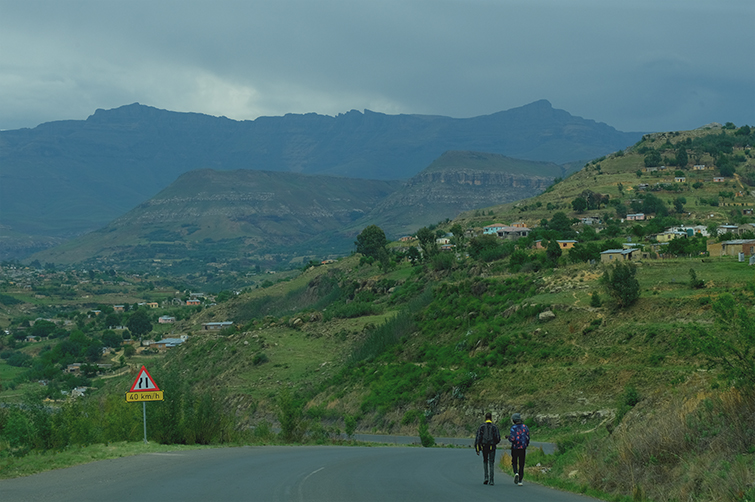 The University of the Free State’s Qwaqwa Campus continues to foster research that addresses climate, health, and sustainability challenges in communities.
A conference stage in the mountains. Research presentations rooted in rural communities. Young scientists finding their voices while addressing climate, health, and sustainability challenges that affect everyday lives. In the
Centre for Global Change (CGC) on the University of the Free State Qwaqwa Campus, research is opening up opportunities and building a new generation of researchers committed to meaningful societal impact.
The work of the CGC speaks directly to the university’s commitment to responsible societal futures by supporting research that responds to real community challenges while developing young researchers equipped to contribute to sustainable and socially responsive solutions.
Opening opportunities through community-focused research
Although the centre is still relatively young, its impact is already visible. According to
Thandi Dhlamini, Assistant Officer: Research Development in the CGC, 16 postgraduate students have graduated through the programme in the past two years. Eight students formed part of the Class of 2025 and another eight graduated in 2026.
Prof Patricks Voua Otomo, Associate Professor in Zoology and Entomology and Head of the Centre for Global Change, says the recent cohort stands out for its academic excellence and research contributions.
“Four master’s students graduated with distinction,” he says. “Two of the five honours students also contributed work that formed part of a scholarly publication.”
According to Prof Otomo, one of the centre’s greatest achievements lies in the opportunities it creates for students who may otherwise not have had access to postgraduate funding. “By creating sponsorship opportunities for students who otherwise might not have had access to funding, and by supporting research that directly addresses challenges in our communities, we are not only transforming individual lives but also strengthening the University of the Free State’s impact and relevance within the communities it serves,” he says.
Since its inception, the CGC has supported scholarships for around 60 postgraduate students. Six of these graduates gave voice to their positive experiences with the centre, reflecting on how it shaped their academic journeys and personal growth.
Preparing young researchers for meaningful societal impact
“The CGC scholarship played a key role in both my academic journey and personal development,” says Bongeka Gabela. “The programme gave me more than financial assistance. It provided an environment of encouragement and mentorship that helped me grow as a student and as a professional.”
Kefiloe Masondo says the centre has helped her connect research with community needs, specifically livestock health. “The CGC gave me confidence in my abilities and motivated me to pursue research that has a direct impact on society and environmental health,” she says. “Being associated with the CGC also made me feel part of a larger community of researchers working towards sustainable and community-driven solutions.”
Several graduates highlighted the opportunities they received to present their work at conferences – often for the first time.
“One of the achievements I am most proud of is attending my first academic conference through the CGC,” says Nokulunga Dlamini. “It helped me overcome my fear of public speaking and gave me the opportunity to present my research to a wider audience.”
Khia van der Meulen says attending the South African Mountain Conference (SAMC2025) was one of the greatest opportunities she has experienced on her academic journey. “Without the CGC, I would never have been able to go to SAMC2025, where I was able to meet incredible scientists and colleagues, collaborate on future projects, and showcase my work on a conference platform for the first time,” she says. “It was an experience I will never forget.”
Arnie le Roux says that, for him, the centre has created a sense of belonging within the postgraduate community. “The CGC allowed me to integrate with a team of postgraduate students when I started on the Qwaqwa Campus, with many opportunities to collaborate and grow with others,” he says.
Nomcebo Ndlovu notes that the centre’s support has helped her grow professionally and stay resilient. “The CGC assisted with conference and fieldwork costs during my master’s degree, which strengthened my skills in research, GIS, and remote sensing,” she says. “I am most proud of completing my master’s and presenting my work at conferences, and I am grateful for the encouragement and funding that made this possible.”
As the centre continues to expand, its success can already be measured through the people it has helped shape. Students are leaving the university as researchers, professionals, and problem-solvers prepared to contribute meaningfully to society, their communities, and the future of global change research.